
Heat, Dust and Outdoor Monitoring: Questions to Ask Before Buying
Turn heat, dust, sunlight, power and telemetry concerns into verifiable procurement questions for an outdoor radiation-monitoring installation.
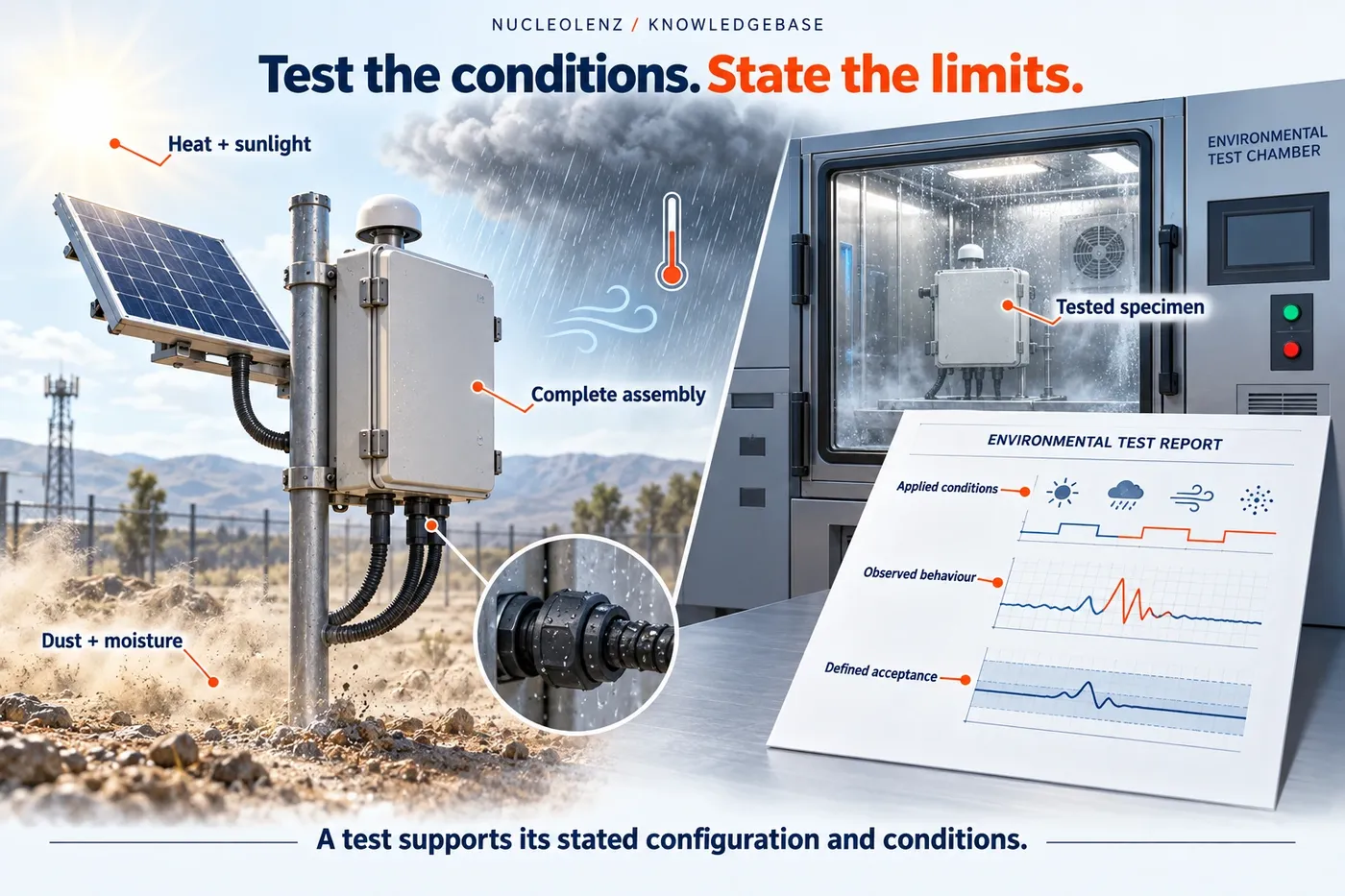
Open the concept graphic at full size ↗
Three key ideas
Specify the site before choosing the monitor
- Environment: Describe heat, sunlight, dust, rain and mounting.
- Continuity: Define power, communication and unavailable-data behavior.
- Evidence: Verify the offered assembly and maintenance plan.
At a glance
A practical review guide
| Review point | Evidence to look for | What it does not establish |
|---|---|---|
| Exposure | Conditions at the installed position | Suitability from a regional climate label |
| Power | Documented assumptions and interruption behavior | Universal autonomy from ideal-condition claims |
| Telemetry | Current data, timestamps and status behavior | Valid readings merely because a port exists |
| Maintenance | Access and approved methods for the assembly | Long-term readiness from initial installation alone |
Use the applicable instrument documentation and the approved site programme for operational decisions.
Buying an outdoor radiation monitor begins with the installation you need to support. A climate label or the word rugged does not describe the conditions at the detector, the power available through the year or the way operators will recognize missing data. A useful specification makes those questions explicit and asks the supplier for evidence for the offered configuration.
Describe the actual exposure
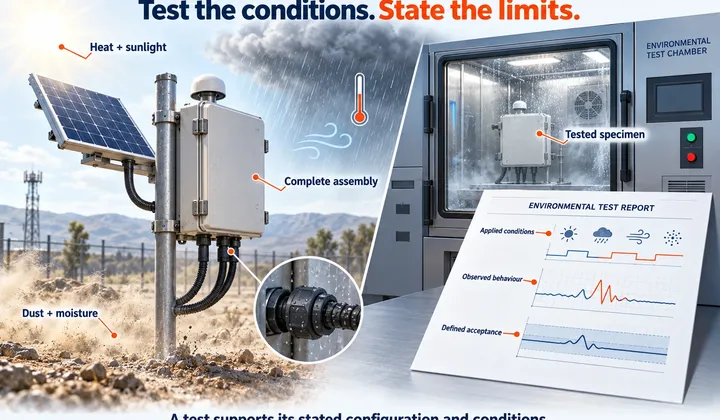
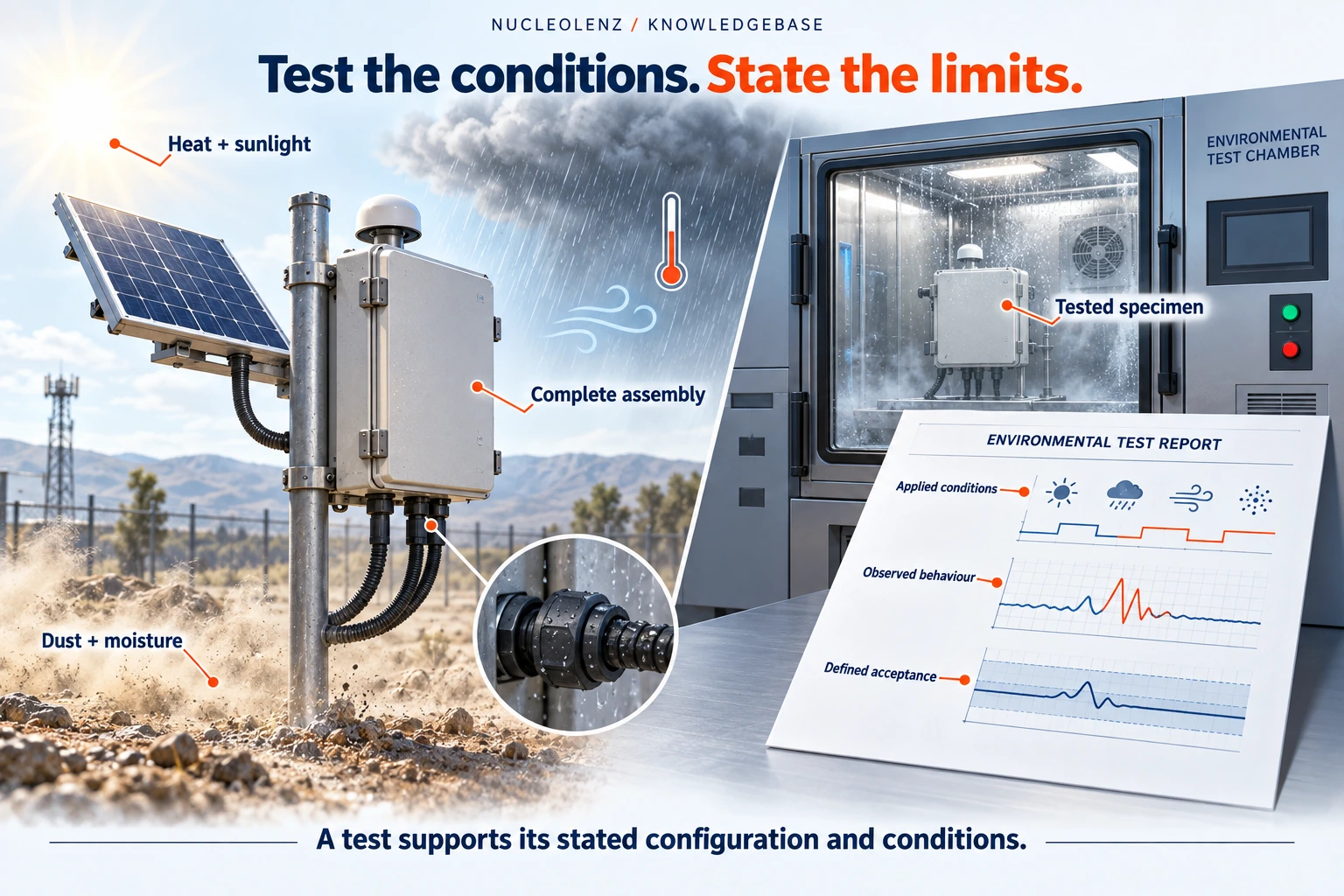
Record sunlight, temperature, humidity, rain, dust and any relevant site influences at the proposed location. Include mounting, shade and protective enclosures. Distinguish operation from storage and transport. A regional temperature range may not describe the conditions inside a sunlit box or beside process equipment. The aim is to give the supplier enough context to assess the complete installation, rather than ask for a generic outdoor label.
Ask what each published limit covers
Identify the enclosure, detector, connectors, cable entries and accessories to which a rating or limit applies. Ask which conditions and configuration are assumed. Thermal performance, dust and water ingress, electromagnetic compatibility and hazardous-area approval are different matters. Evidence for one should not be used as shorthand for the rest. The companion article on environmental suitability explains how to keep these claims separate in a deployment review.
Make the power question concrete
State the available supply and the behavior required during interruption. For a proposed solar arrangement, ask which site conditions, energy use and system configuration support the design. An autonomy statement under favorable conditions is not a guarantee for every site or season. Identify which assumptions the project will verify and who owns that assessment. Also ask how low power, interruption and recovery appear in the equipment and remote records.
Treat unavailable data as a defined condition
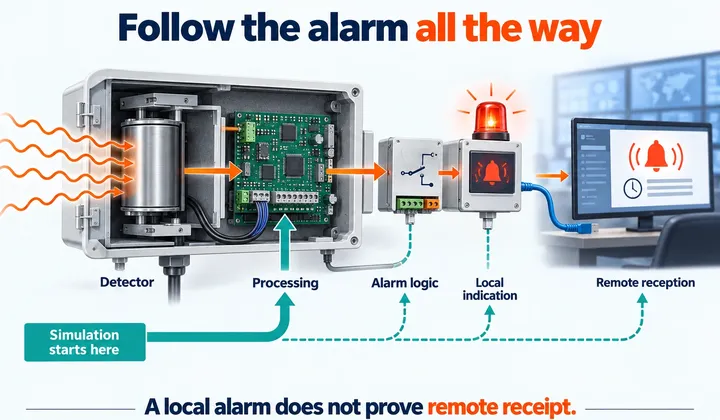
A remote monitoring screen should allow the responsible person to distinguish a valid current measurement from stale or unavailable information. Procurement can specify what information is needed: timestamps, instrument status and communication-state indications, for example, where supported. Ask how the offered system will meet the requirement and how that behavior will be checked. The presence of a communication port does not establish the behavior of the complete site network.
Practice: the easy-to-reach mounting point
A fictional buyer chooses a location because installation is simple and cable routing is short. A later review finds that the position is difficult to access for the approved response checks and exposes connectors to conditions not described in the original requirement. The issue is not solved by choosing a product with a tougher-sounding name. Revise the site requirement, compare the actual configurations and document how inspection and maintenance will be performed.
That review can happen before ordering. It is usually easier to resolve an access or documentation gap in procurement than after the monitor has been commissioned.
A procurement worksheet that supports comparison
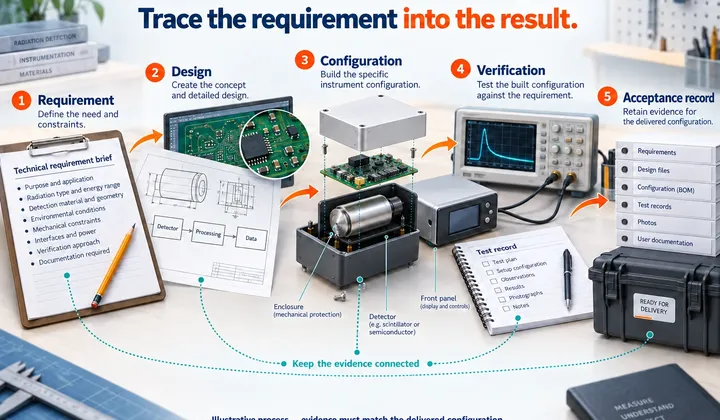
For each requirement, record the site condition, offered configuration, supporting document, acceptance evidence and unresolved assumptions. Include maintenance access, approved cleaning, service arrangements and document availability. Avoid scoring a general marketing adjective as if it were a measured result.
The Nucleolenz Outdoor Area Gamma Monitor provides a starting point for a defined outdoor gamma-monitoring enquiry. Confirm the supplied configuration and verified limits against the project requirement. Finish with an installation and verification plan that connects the procurement claims to the actual location and receiving system.
Check your understanding
Put the idea to work
Choose an answer, then reveal the explanation. Your answers stay in this browser.