
Five Checks Before a Radiation Survey
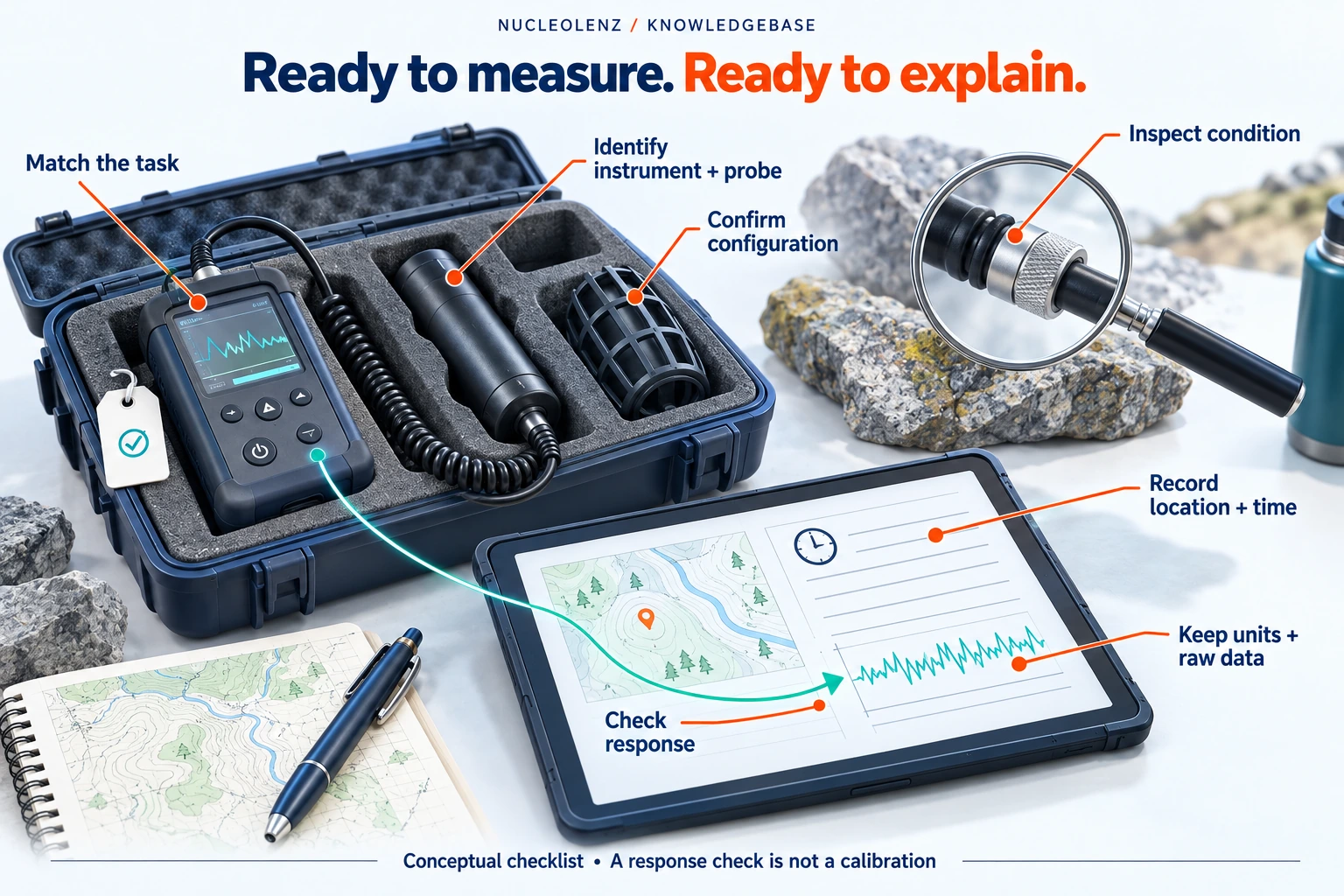
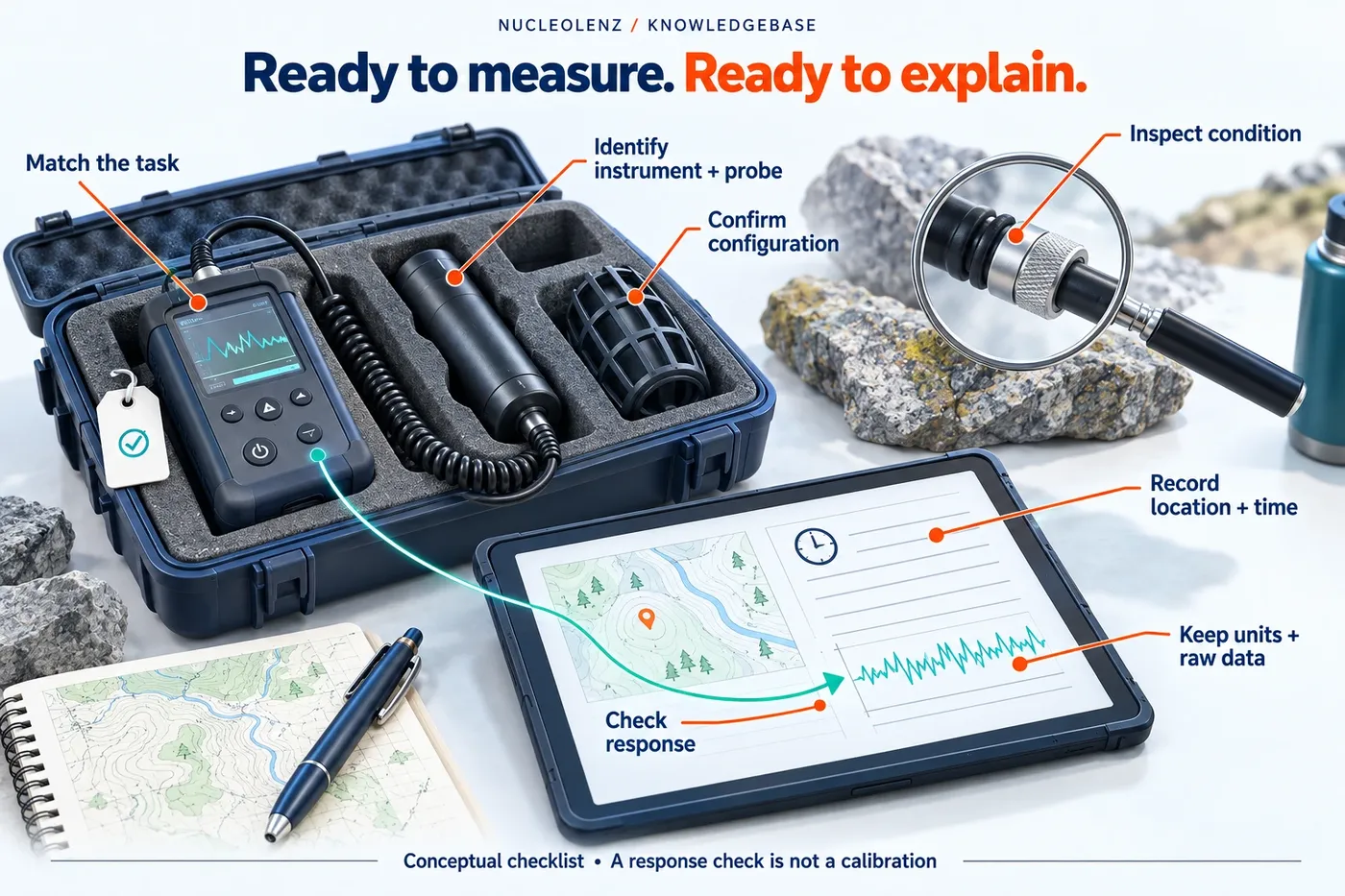
Five preparation checks connect the survey task, instrument, calibration, response check and recording plan before the first result is collected.
Open the concept graphic at full size ↗
Three key ideas
Before the first reading
- Match the task: Confirm quantity, radiation, meter and detector.
- Establish readiness: Inspect, review calibration and complete approved checks.
- Prepare the record: Set locations, units, background and escalation route.
At a glance
A practical review guide
| Review point | Evidence to look for | What it does not establish |
|---|---|---|
| Instrument identity | Meter, probe and selected mode | Suitability of an unidentified replacement probe |
| Calibration | Applicable configuration and conditions | Continuing function after damage or transport |
| Response check | Observed result against its reference | A new calibration |
| Survey plan | Locations, units and response route | Permission to improvise a new method |
Use the applicable instrument documentation and the approved site programme for operational decisions.
A radiation survey begins before the first reading. Preparation connects a specific measurement question with equipment that can answer it and a record that another person can interpret. A display showing a number is only one part of that chain. These five checks provide a practical review structure for trained users; the approved method supplies the equipment-specific instructions.
1. Match the instrument to the question
Write down what the survey is intended to establish: an external radiation field, surface contamination or another defined quantity. Identify the relevant radiation and the conditions expected at the measurement position. Then match the meter, detector and operating mode to that requirement. A contamination probe giving counts is not automatically a calibrated dose-rate instrument. Record both meter and probe identities when they are separate components.
2. Inspect the complete equipment
Review the instrument using its current manual. Pay attention to the detector window, housing, cable, connectors and accessories, as applicable. Include the available power and the instrument's status indications. A damaged window and a loose connector call for different investigations, but either can undermine a measurement. If an observation meets the programme's withdrawal criteria, identify the equipment accordingly and arrange the approved alternative. A survey deadline does not resolve an unexplained fault.
3. Review calibration and configuration together
Confirm that the calibration record applies to the system now assembled and to the intended measurement. Check the relevant dates, quantity, ranges, corrections and limitations. A current label cannot explain whether an external probe has been changed since calibration. Record any detector profile or configuration identifier used by the method. Do not make an undocumented setting change merely to produce a familiar reading. The article on reading a calibration certificate develops this review.
4. Establish continuing function
Carry out the approved response or functional check and retain its actual result. For a source response check, the reference arrangement matters: changing orientation or geometry can change the indication even when the instrument has not changed. Compare using the programme's defined criteria. An unexplained difference should enter the investigation process; repeated attempts should not replace the original observation. A response check supports continuing-function evidence, while calibration characterizes the measurement relationship.
5. Prepare the record and response route
Before collecting operational results, identify the locations, background method, units, acquisition mode and information needed to describe the source or process state. Confirm who receives an unexpected result and which approved action applies. Preparing the form early often reveals ambiguities that would otherwise appear only during review. Include a place for status messages and deviations so that the final record can distinguish a valid result from an interrupted measurement.
Practice: the replacement probe
In this fictional exercise, a team prepares for a routine survey with a meter whose calibration label is current. The assigned probe is unavailable, so another probe is placed in the case. The display works and shows counts. Which check catches the problem? The identity review exposes the substitution; the calibration and configuration review determines whether it is supported. A successful response check alone cannot establish that the replacement gives the required measurement.
A useful preparation record links the task, equipment combination, document references, check result and operator. Keep it with the survey record. When reviewers can follow that chain, they can assess what the measurements mean without reconstructing the setup from memory.
Check your understanding
Put the idea to work
Choose an answer, then reveal the explanation. Your answers stay in this browser.