
What Makes a Radiation Survey Record Useful?
Turn radiation readings into a traceable survey record: define the question, equipment, geometry, observations and review status, with a worked handover example.
Open the concept graphic at full size ↗
Three key ideas
From reading to a reviewable record
- Purpose: Name the item, location and measurement question.
- Evidence: Keep units, equipment, method and conditions.
- Decision: Identify review, limitations and follow-up.
At a glance
A practical comparison
| Observation | What it tells you | What else you need |
|---|---|---|
| Raw observation | What was actually recorded | Units, timestamp and method context |
| Derived result | What was calculated from observations | Inputs, method and assumptions |
| Review decision | How the result is being used | Criteria, reviewer and any open actions |
| Not measured | A known gap in coverage | Reason and follow-up responsibility |
Educational comparison; apply the method specified for the instrument and task.
A list of readings can look complete while leaving the next reviewer unable to reconstruct the survey. A useful record explains how the measurement was obtained and what decision it was intended to support.
Identify the question and location
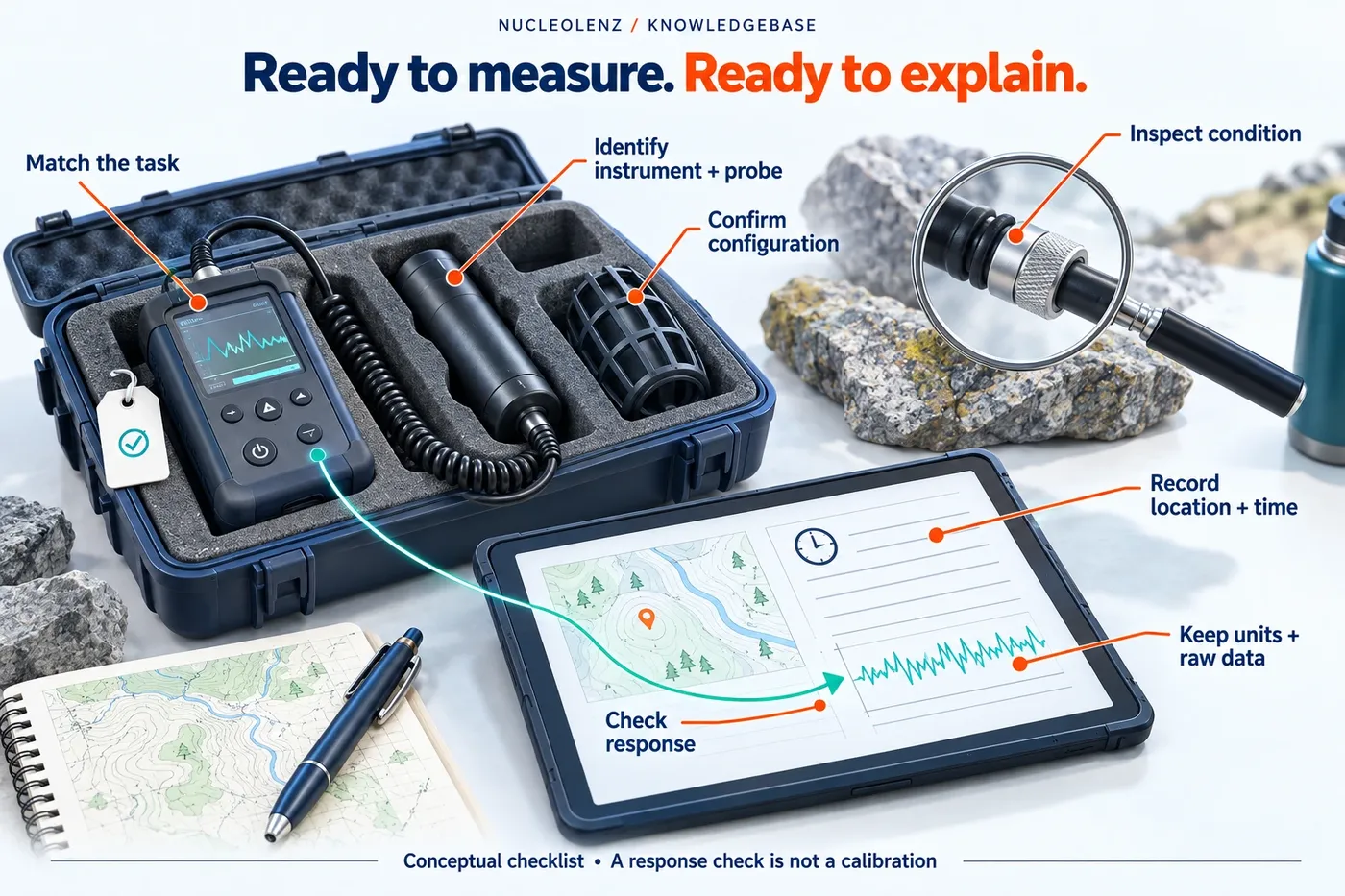
State the purpose of the survey, the area or item investigated and the date and time. Use a location description or sketch that another person can interpret. “Near the equipment” is often less useful than a defined point on a labelled plan.
Record relevant source or process conditions. A measurement taken during operation may not represent the same situation as one taken during a shutdown.
Keep the measurement chain visible
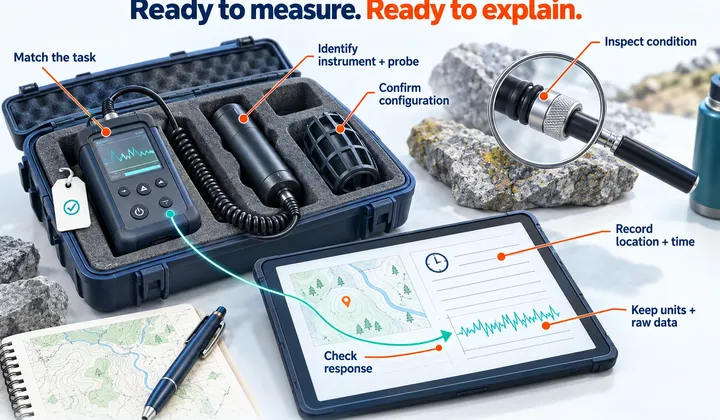
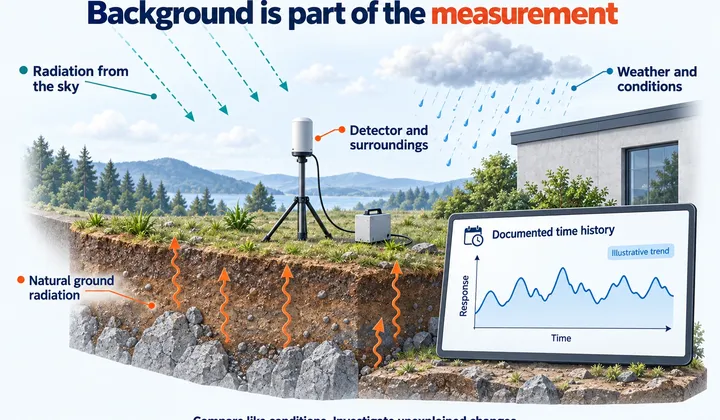
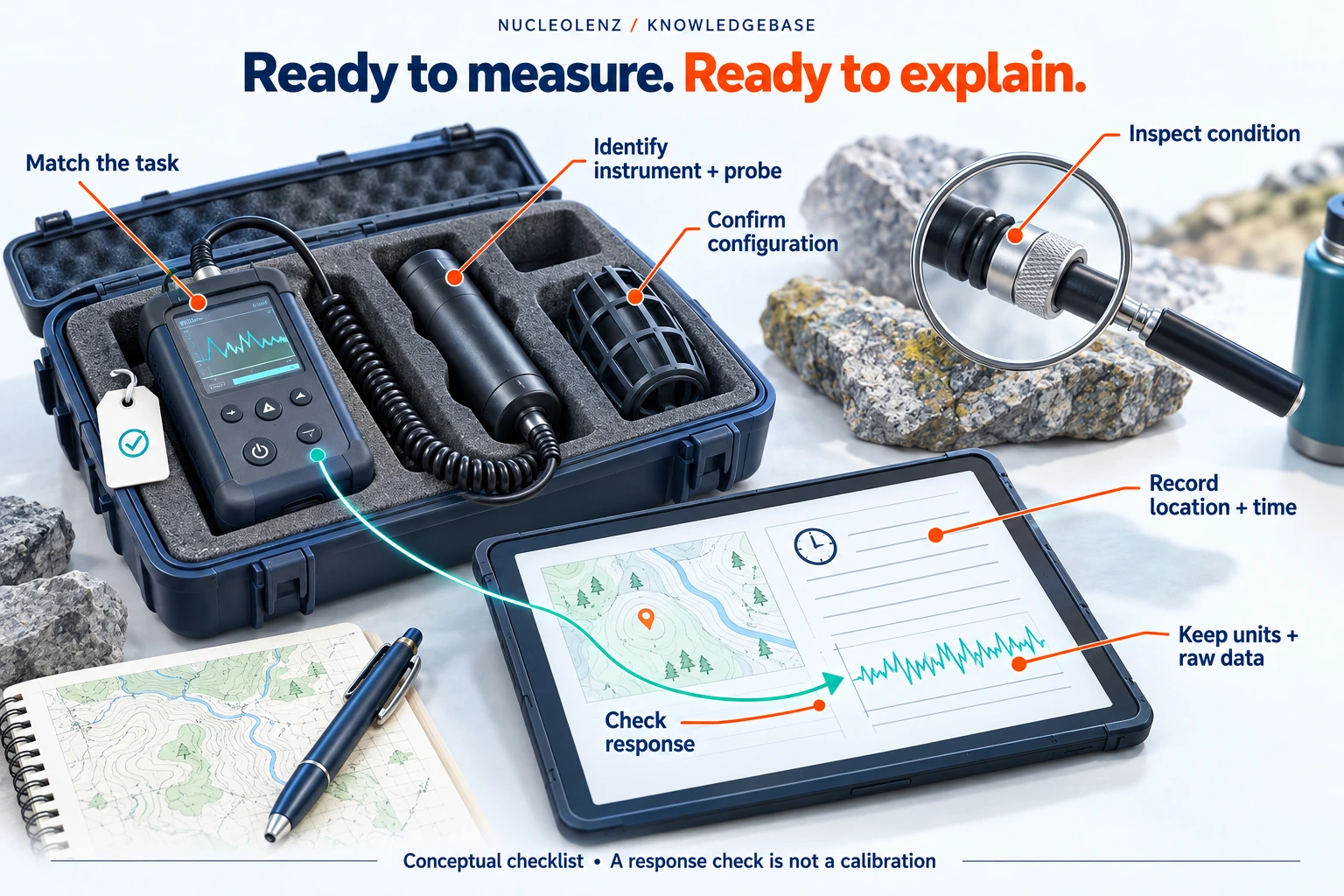
Include the instrument and detector identities, calibration reference, selected mode, displayed quantity and units. Record background and the way it was established when it is part of the method. Describe the detector position, orientation and measurement duration as needed for repeatability.
For contamination work, identify whether the result came from a direct scan, a defined static measurement or a wipe-and-count method. Those descriptions should not be silently combined under one generic “survey” label.
Connect observations to follow-up
Keep original observations even when a later measurement explains an unexpected indication. Changes or corrections should preserve the history rather than making the first result disappear.
Also distinguish a missing measurement from a recorded zero, and an unassessed result from an accepted result. A blank field should not have to carry several different meanings.
Nucleolenz instrumentation discussions are easier when a survey record states the required quantity and geometry. A clear record can reveal whether a different detector, acquisition mode or reporting workflow is needed. The equipment choice and the record design should support the same measurement question.
A handover example: make the next question answerable
Consider a fictional maintenance handover containing the entry: room checked, normal. The next shift cannot tell which room positions were observed, whether equipment was running, what normal means, or whether the result concerned a radiation field or surface contamination. The problem is not a missing decorative signature; the measurement itself is undefined.
A more useful entry links a labelled location plan, the survey procedure and revision, the meter and detector identities, and the original values with units. It records the operating state, any access restrictions and the reviewer responsible for the conclusion. A separate decision field states what the result supports. This makes the observation useful without claiming that one template establishes regulatory compliance.
Keep observations and interpretations separate
- Observed: The original display or stored result, its units, timestamp and acquisition information.
- Calculated: A derived value with the method, inputs and assumptions needed to reproduce it.
- Interpreted: A conclusion made against the applicable criteria by the responsible reviewer.
- Unresolved: A missing field, unexpected result or access limitation with an owner for follow-up.
This separation helps when a later review changes the interpretation. The original observation remains available, and the reason for the new conclusion can be recorded alongside it. Avoid copying a calculated value back into the raw-results field as though the instrument displayed it.
Check the record before leaving the task
Ask whether someone unfamiliar with the work could identify the measured item, the measurement method and the basis of the conclusion. Check that attachments have stable identifiers and that timestamps use a clear date and time convention. A photograph may help locate a point, but should supplement the measurement details rather than carry an unexplained result on its own.
Check your understanding
Put the idea to work
Choose an answer, then reveal the explanation. Your answers stay in this browser.