
Spot the Radiation Survey Mistake: Three Record-Review Exercises
Practise reviewing three fictional radiation survey records. Find missing units, an undocumented probe substitution and an invalid background comparison, then choose an evidence-based correction.
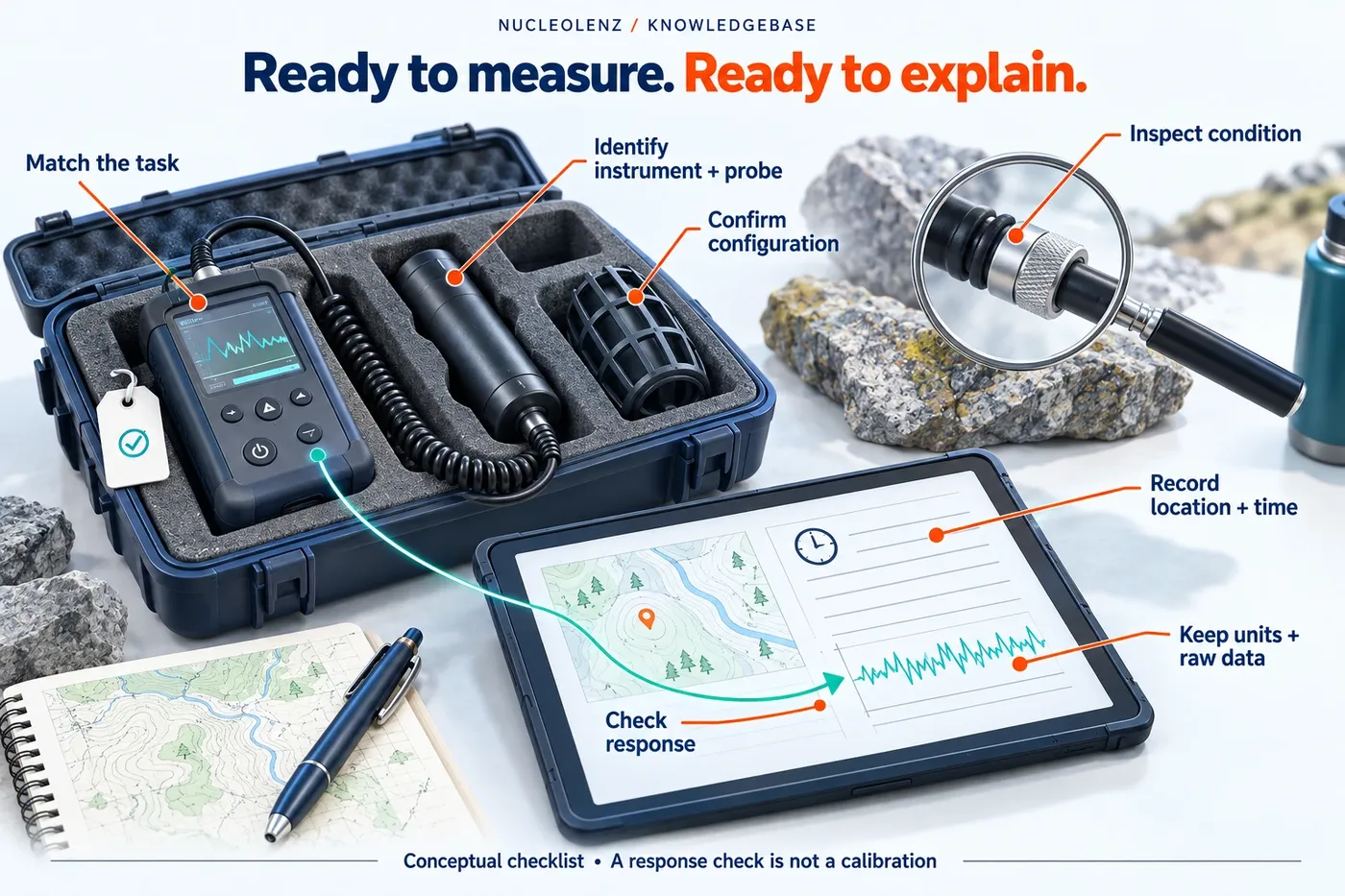
Open the concept graphic at full size ↗
Three key ideas
Find the missing evidence
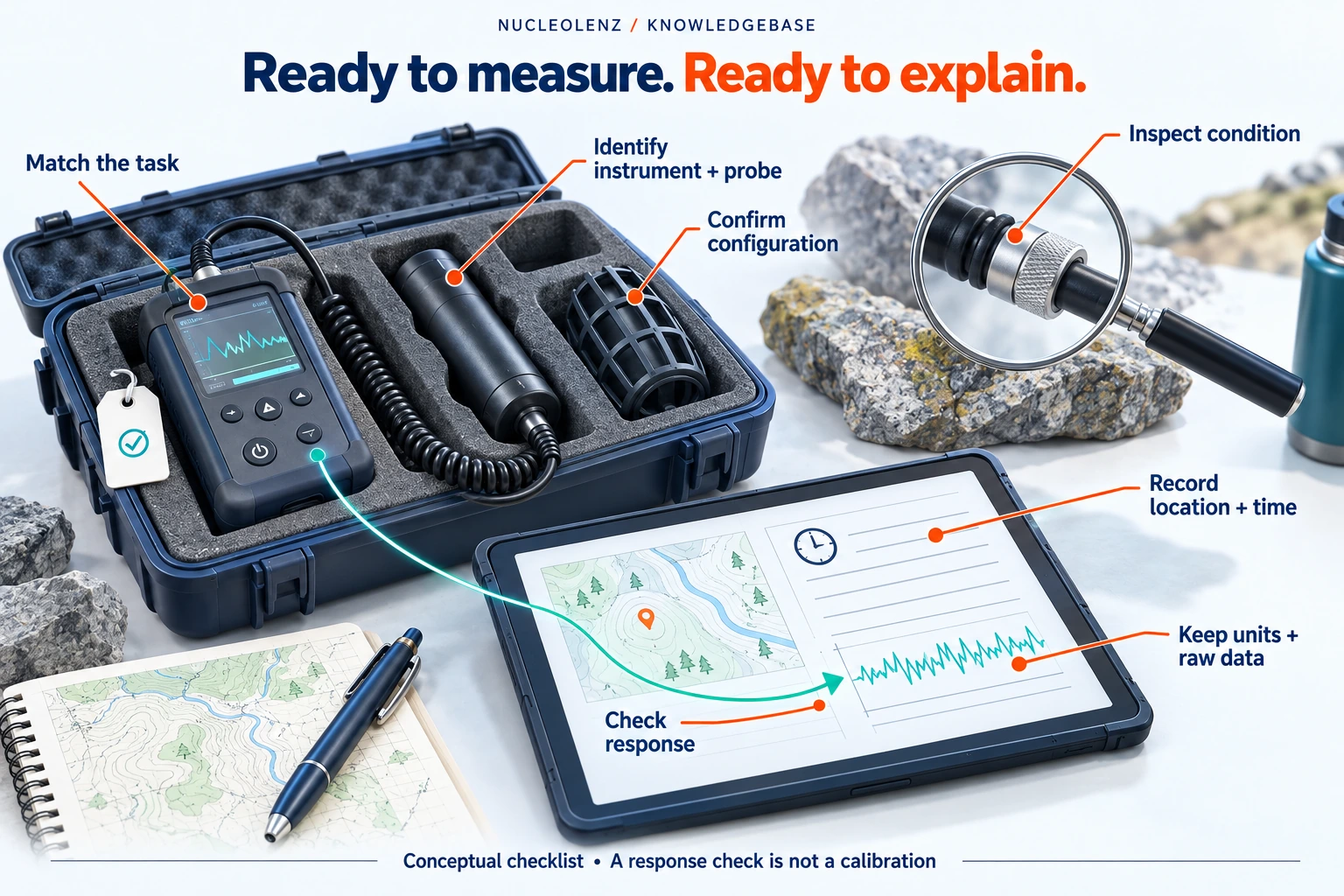
- Meaning: Does the number have a quantity and unit?
- System: Is the complete meter–probe setup identified?
- Comparison: Are reference and result meaningfully comparable?
At a glance
A practical comparison
| Observation | What it tells you | What else you need |
|---|---|---|
| Reading: 12 | A number was recorded | Quantity, unit, interval and original display context |
| Replacement probe used | The setup changed | Probe identity and supported meter–probe configuration |
| Background from elsewhere | A separate reference was recorded | Method, geometry, timing and relevance |
Educational comparison; apply the method specified for the instrument and task.
A survey can contain plausible numbers and still lack the information needed for a conclusion. These deliberately incomplete fictional records help readers practice identifying the missing evidence.
Exercise one: the number without its meaning
A record says “reading: 12” and names the location. What quantity and units were displayed? Was it a rate, an accumulated quantity or a count? What interval and configuration apply?
The lesson is not that the number is wrong. It is that the record does not yet let another person interpret it. Ask the recorder for the original indication and method; do not guess a unit from the surrounding task.
Exercise two: a substituted detector
A survey names the meter but mentions that a replacement probe was used. There is no detector identity or configuration reference. Which calibration and functional-check arrangement applied to the assembled system?
A physically compatible connector is not enough to resolve the question. Obtain the relevant configuration and combination records before using the result in a decision.
Exercise three: an unexplained comparison
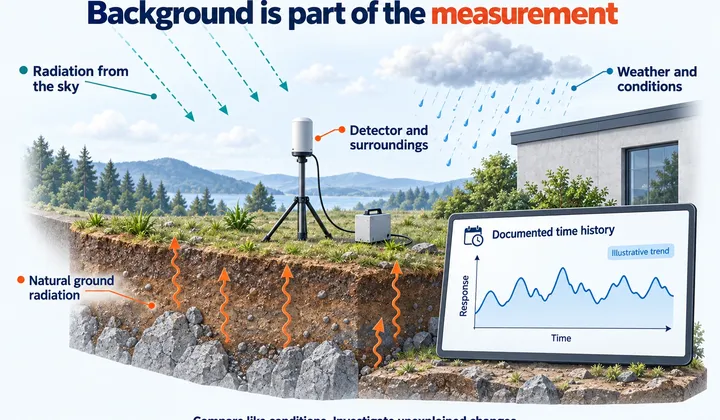
A surface result is compared with a background measured elsewhere, using a different acquisition mode. What does that comparison support? Which geometry, duration and detector settings would be needed to establish a meaningful reference?
Do not fix the fictional record by inventing a background or subtracting unlike values. Identify the missing context and the appropriate method to resolve it.
Review the evidence, not the appearance of completeness
Keep original records and document corrections through the approved process. A worksheet with every box filled can still contain an invalid comparison; a transparent record can explicitly state that a question remains unresolved.
Use these exercises in a supervised training discussion. They are not a replacement for instrument-specific procedures or an assessment of an actual site's results. The transferable skill is asking which measurement was performed, under which conditions and with what evidence for the conclusion.
Worked review: what would resolve each record?
1. Recover the display context
The fictional entry reading: 12 might describe counts per second, accumulated microsieverts or another quantity. Ask for the original instrument record, measurement mode and observation interval. If these cannot be recovered, label the result insufficiently documented for the proposed use. Adding the unit most commonly used by the team would create an unsupported measurement history.
2. Identify the complete measurement system
For the substituted probe, obtain the probe model and serial number, the meter identity and the approved configuration or calibration record for that combination. The investigation may confirm that the pairing was supported, or it may leave the result unresolved. Do not infer either outcome from the fact that the connector fitted. A successful power-on is not evidence of the required measurement response.
3. Explain the comparison before calculating
For the background measured elsewhere, list the changed location, mode, geometry and acquisition duration. Ask which parts of the approved method establish an appropriate reference. Normalizing durations alone cannot correct a difference in detector settings or surroundings. The original values should remain visible while the reviewer decides whether additional evidence or a repeat measurement is required.
Use an evidence and decision worksheet
- Evidence available: Copy the actual record and identify its attachments.
- Question unresolved: State exactly what prevents interpretation.
- Next evidence: Name the record, method or responsible person that could resolve it.
- Decision status: Mark the conclusion as supported, limited or awaiting review.
In a group exercise, compare the explanations before revealing the answer. A good review identifies why the missing detail matters and which conclusion is affected. It does not reward inventing the most plausible missing number. The same distinction helps a real team improve its forms: add fields that prevent recurring ambiguity, while keeping the original observations easy to find.
Check your understanding
Put the idea to work
Choose an answer, then reveal the explanation. Your answers stay in this browser.