
Cleaning Radiation Instruments Without Damaging the Measurement System
Separate dirt removal, disinfection and radioactive contamination control. Use model-specific methods, protect sensitive parts and verify return to service.
Open the concept graphic at full size ↗
Three key ideas
Clean with the measurement system in mind
- Define the task: Dirt, disinfection and contamination need distinct reviews.
- Protect the parts: Use model-specific methods for each sensitive component.
- Verify readiness: Record inspection and the checks needed before reuse.
At a glance
A practical review guide
| Review point | Evidence to look for | What it does not establish |
|---|---|---|
| Cleaning objective | Dirt removal, disinfection or contamination task | That one method satisfies every objective |
| Sensitive parts | Permitted method for window, connectors and display | Permission from enclosure appearance |
| Ingress rating | Conditions for the specified configuration | Permission to soak the whole instrument |
| Return to service | Required checks and authorized review | Radiological clearance based on appearance |
Use the applicable instrument documentation and the approved site programme for operational decisions.
Cleaning a radiation instrument is a maintenance decision as well as a housekeeping task. The method can affect detector windows, seals, connectors and the material being removed. A clean-looking surface is not evidence that radioactive contamination has been assessed, and a method suitable for a tough enclosure may damage the detector attached to it. Begin by identifying both the equipment and the actual cleaning need.
Name the task before choosing a product
Ordinary dirt removal, disinfection and radioactive decontamination have different objectives. An ordinary cleaning checklist cannot establish the success of contamination control. Where radioactive contamination is suspected, the site's assessment and authorized procedures determine handling, verification and any waste arrangements. Do not transfer a chemical recommendation from a different instrument simply because its housing looks similar. Ask for current instructions for the exact model and materials involved.
Treat sensitive surfaces separately
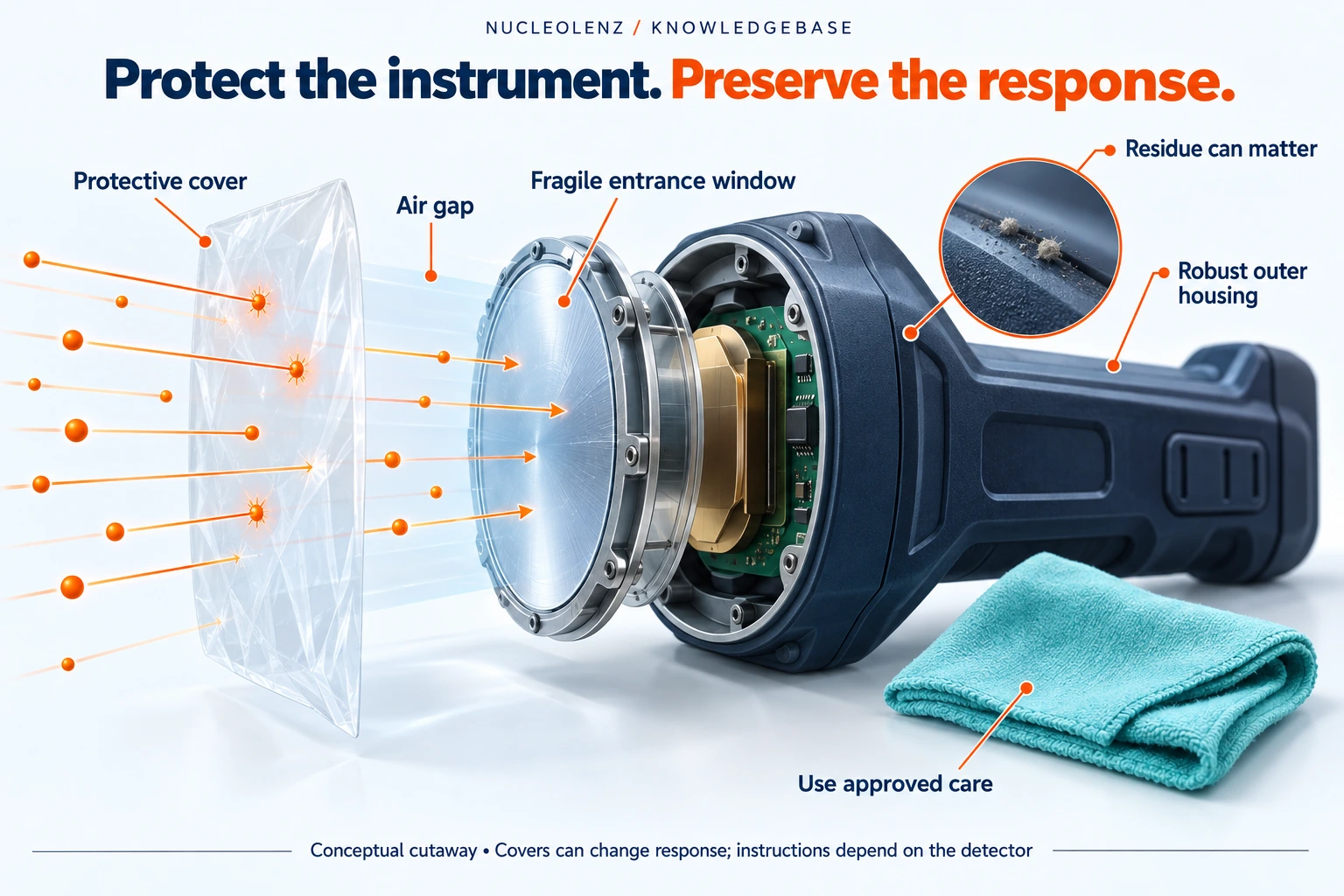
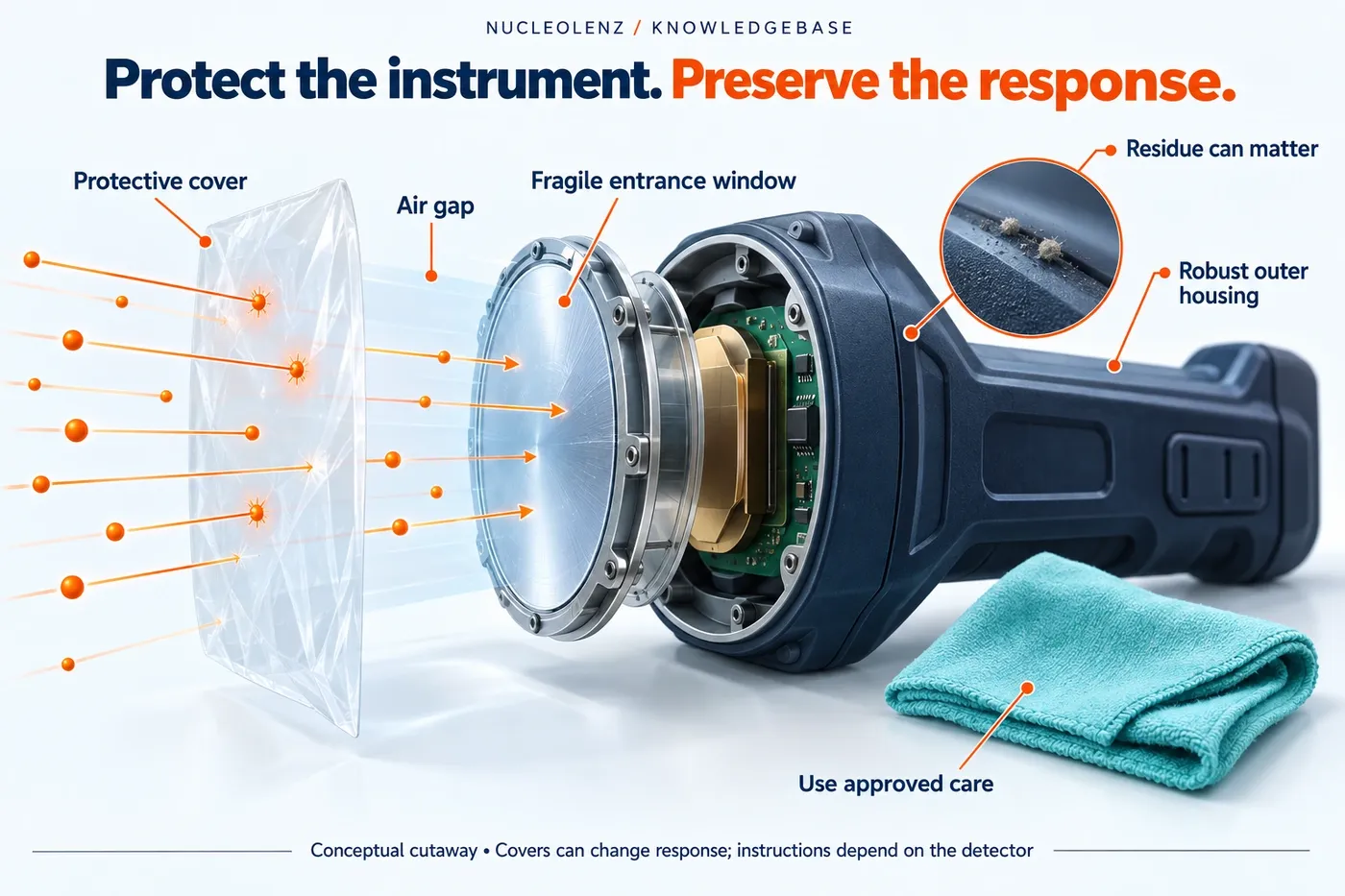
A detector entrance window may be much more delicate than the main enclosure. Connectors, cable entries, display surfaces and controls can have different restrictions. Follow the manual's power-isolation and maintenance guidance before work begins. Avoid assuming that a general instruction to wipe an instrument applies equally to every component. The maintenance record should identify sensitive areas explicitly so the person doing the work is not expected to infer them from the product's appearance.
A stated enclosure ingress rating is not blanket permission to immerse, pressure-wash or soak the complete assembly. The supplied configuration, connector condition and permitted cleaning method still matter. If the documentation does not cover the proposed method, request clarification before using it. A substitute cleaner with a similar name can have a different formulation, so retain enough product information to identify what was actually used.
Practice: one instruction for two surfaces
Consider a fictional service desk preparing an external-probe meter for its next user. The worksheet says only “wipe the instrument.” One person interprets this as the enclosure; another includes the thin detector window. The weakness is in the instruction, even if no damage has yet been found. Rewrite the worksheet so each component has a documented permitted method and any no-contact area is unambiguous.
If the instrument also has a possible contamination history, add the applicable radiation-protection review. A cosmetic inspection and a contamination assessment should remain separately identifiable. This prevents a completed housekeeping entry from being mistaken for evidence that the equipment is suitable for unrestricted handling or use.
Build a useful maintenance record
- Identify the instrument, detector and components treated.
- Record the reason for cleaning and the instruction used.
- Identify the permitted materials or products sufficiently for later review.
- Note damage, moisture ingress or other unexpected observations.
- Link the required functional and contamination checks, where applicable.
- Record the authorized decision about return to service.
Verify the result appropriate to the task
After the approved cleaning process, complete the inspection and readiness checks specified for the equipment. Where contamination was involved, use the established measurement and release arrangements; appearance cannot replace them. If a fault or damaged window is found, preserve that observation and follow the equipment-control process. Repeated problems may indicate that handling, accessories or the cleaning instruction needs review.
For Nucleolenz equipment, send the model, configuration and intended cleaning objective when requesting guidance. That gives the supplier a concrete question to answer. The useful outcome is a maintained instrument with a traceable record of what was done and how readiness was established.
Check your understanding
Put the idea to work
Choose an answer, then reveal the explanation. Your answers stay in this browser.