
A Radiation Alarm Sounds: Prepare the Response Before the Event
Prepare a clear response to radiation alarms, faults and communication loss. Connect each indication with the right action, contact and event record.
Open the concept graphic at full size ↗
Three key ideas
An alarm needs a prepared response
- Recognize: Identify the actual radiation or equipment-status message.
- Route: Follow the approved action and contact path.
- Review: Preserve observations and verify authorized restoration.
At a glance
A practical review guide
| Review point | Evidence to look for | What it does not establish |
|---|---|---|
| Radiation alarm | Actual indication and approved response | A cause inferred from sound alone |
| Equipment fault | Status message and loss-of-monitoring plan | Normal radiation conditions |
| Remote display | Timestamp, validity and communication status | Current conditions from a stale value |
| Event closure | Authorized review and restoration evidence | Closure by acknowledgement alone |
Use the applicable instrument documentation and the approved site programme for operational decisions.
An alarm is a message that needs an understood response. Its usefulness depends on the instrument, the receiving system and the people expected to act. Prepare those connections before commissioning the monitor. A general article cannot establish the correct action for every facility, but it can help a team identify the questions its approved response plan must answer.
Learn what each indication means
Depending on the supplied instrument, signals can concern radiation, equipment status, power or communication. The meaning comes from the documented configuration. Avoid teaching staff that every sound has one cause or that a fault means radiation conditions are normal. A radiation alarm and loss of valid monitoring information can both require action, but they present different evidence. Training should use the actual display labels and messages that staff will encounter.
Define the response route in advance
The site plan should identify the immediate action, responsible contacts and authority to investigate or restore normal operation. It should also cover unavailable personnel and communication failures. Those details cannot be replaced by a generic alarm threshold or a universal distance. During a live event, follow the approved response; do not approach a suspected source or repeatedly reset an indication merely to obtain a normal-looking display.
A short response card can point to the relevant instruction, state who to contact and identify the information to relay. Keep the card consistent with the current procedure and the installed configuration. An obsolete telephone number or a message label from a different model can create avoidable delay even when the instrument itself works correctly.
Trace the alarm beyond the local display
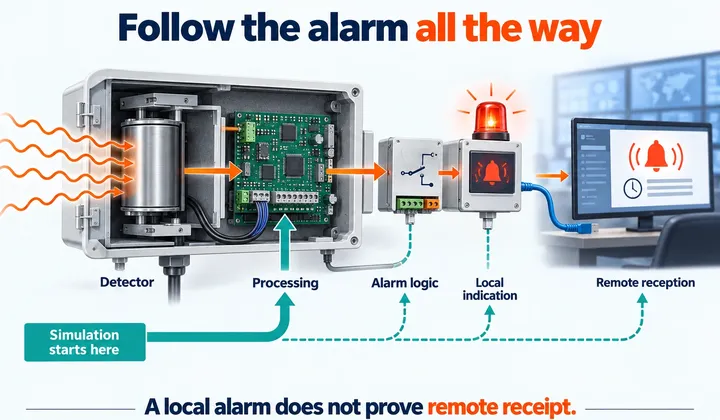
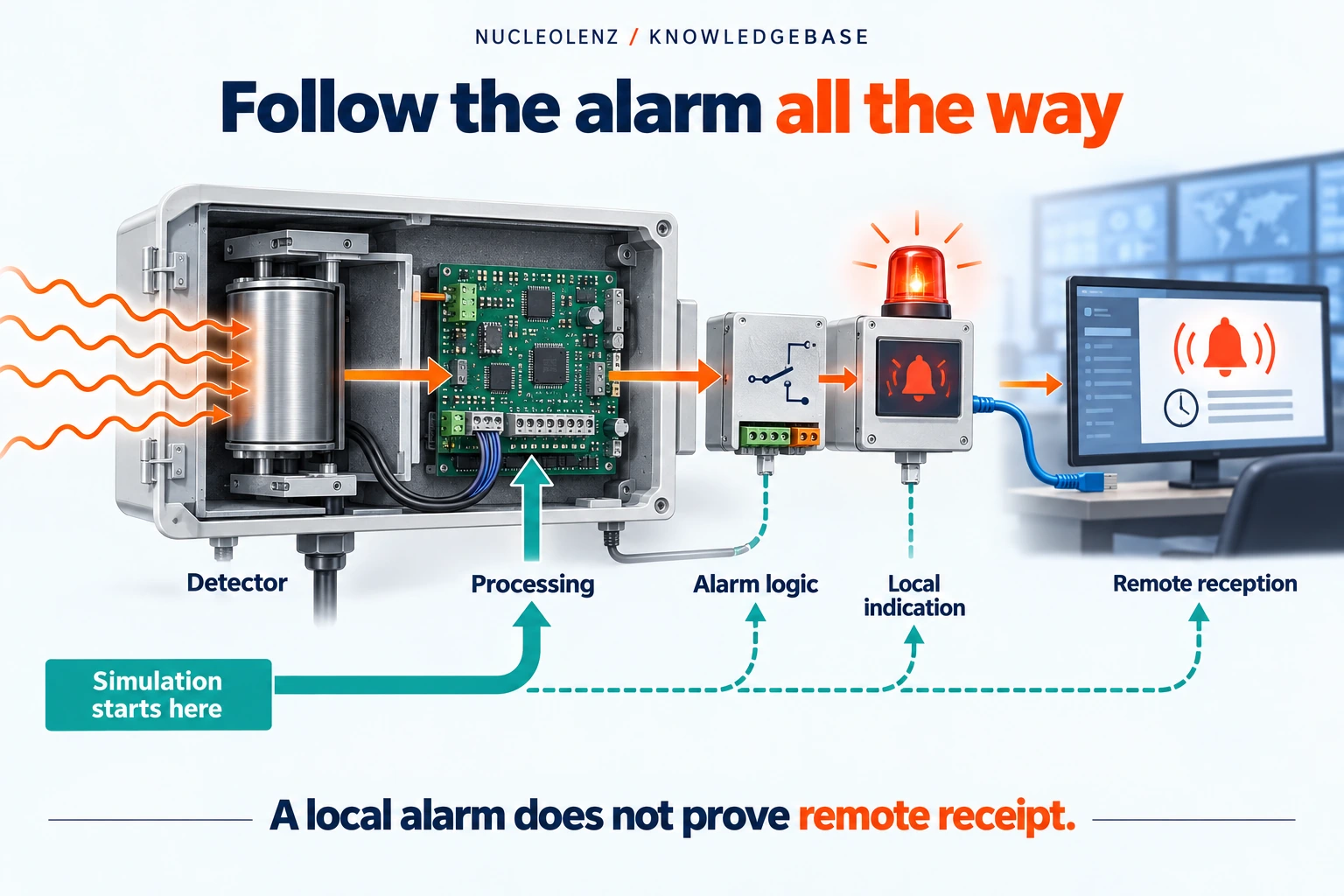
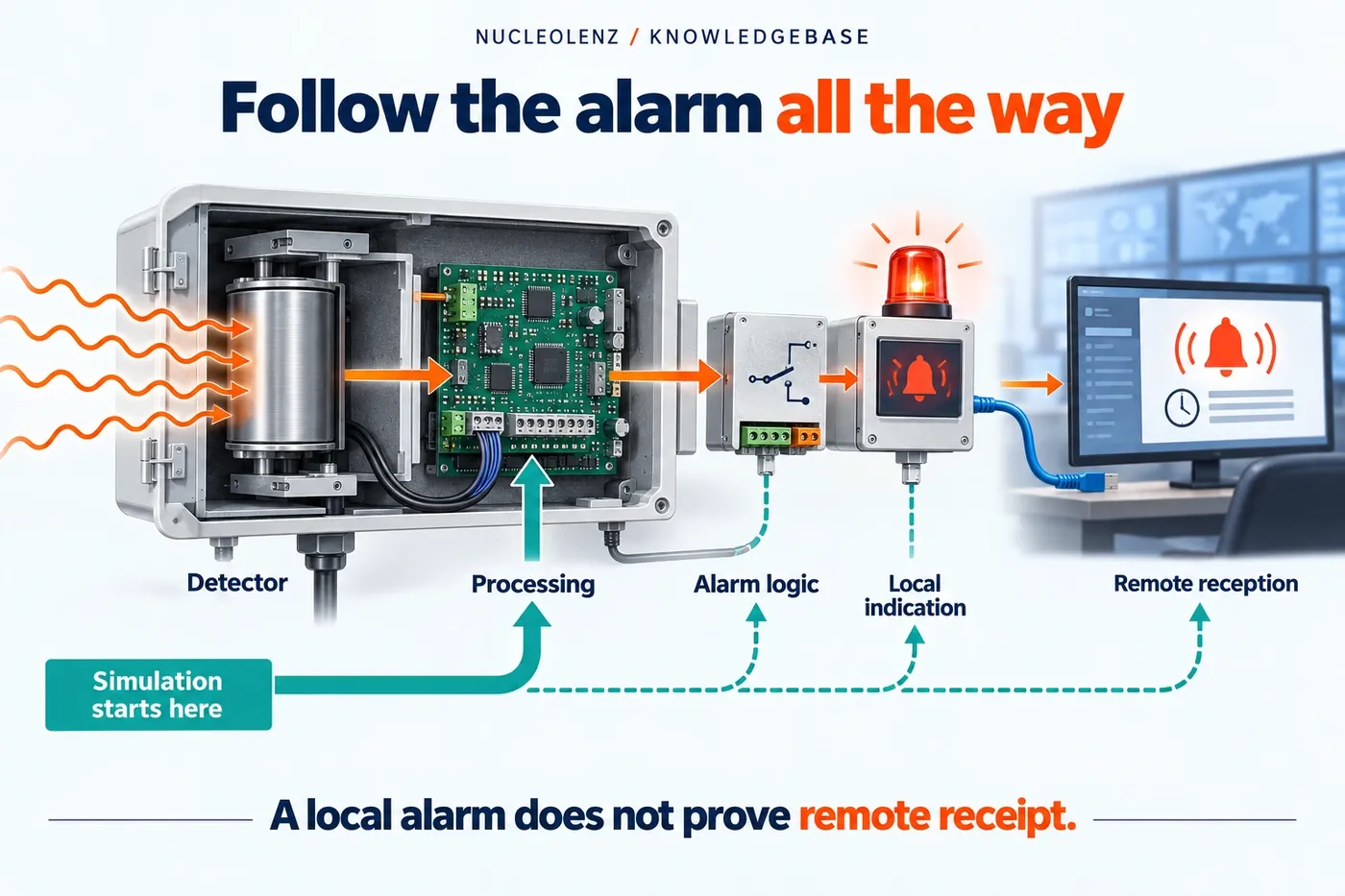
Where a monitor connects to relays, telemetry or a supervisory system, identify how each condition reaches the responsible person. Nucleolenz's Indoor Area Gamma Monitor has documented relay and communication interfaces. Their existence does not establish that a particular site's receiving system has been integrated or tested. The project record should describe which supplied interfaces are used and how loss of the information path is recognized.
Practice: a normal value with an old timestamp
In this fictional tabletop exercise, a control-room screen displays a normal-looking value, but its last update predates a reported communication fault. The screen does not establish current radiation conditions. Participants should identify what is known, which approved loss-of-monitoring instruction applies and who needs the information. The exercise tests interpretation and communication without asking anyone to simulate an actual radiation event.
A second exercise can compare a radiation-alarm message with a battery warning. Ask participants to find the applicable response for each in the approved documentation. The objective is accurate recognition and routing, rather than memorizing that a particular sound is always reassuring or always caused by radiation.
Preserve an event record that supports review
Where the response permits, retain time, instrument identity, location, quantity, indication, status messages and relevant process conditions. Record observations separately from proposed explanations. Acknowledging an alarm, restoring equipment and closing an event are distinct actions; the responsible process defines the evidence and authority required for each.
After an exercise or event, review whether the information reached the correct people and whether the instructions were usable. Assign concrete follow-up for gaps and retain the evidence of completion. The article on verifying the alarm chain explains why a successful local indication alone is not proof that every connected part was tested.
Check your understanding
Put the idea to work
Choose an answer, then reveal the explanation. Your answers stay in this browser.