
Radiation and Contamination: Two Different Measurement Questions
A radiation field and radioactive material on a surface answer different questions. Learn how field readings, direct surveys and wipe measurements complement one another.
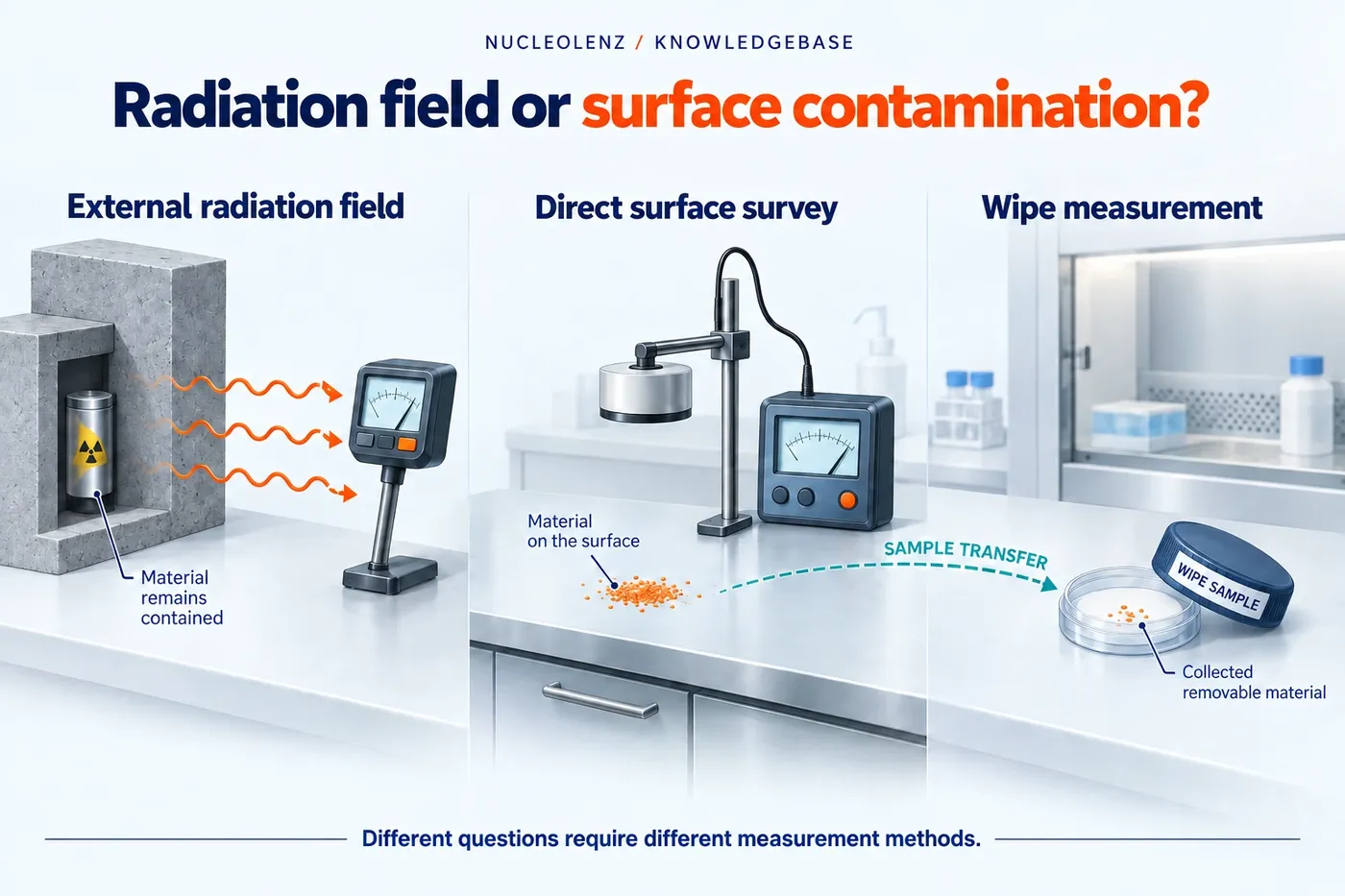
Open the concept graphic at full size ↗
Three key ideas
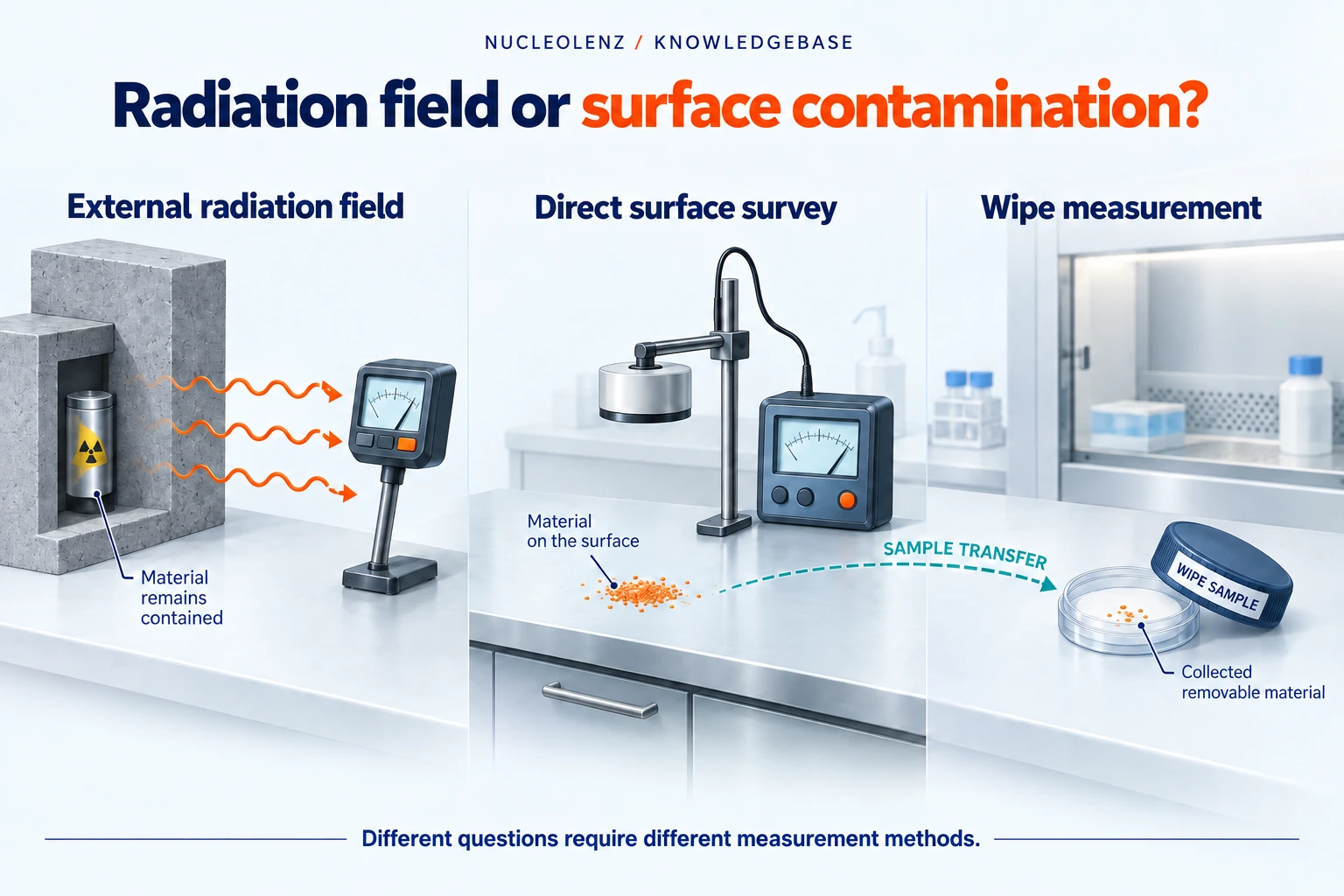
Field, surface or removable material?
- Radiation field: Measure radiation at a defined position.
- Direct surface survey: Assess a suitable detector’s response close to the surface.
- Wipe measurement: Assess material collected from a defined area.
At a glance
Compare the key distinctions
| Focus | What it establishes or needs | Important limit or evidence |
|---|---|---|
| Radiation field | Suitable field monitor | Does not by itself establish surface contamination |
| Direct surface survey | Suitable probe and controlled geometry | Response can include nearby radiation fields |
| Removable contamination | Collected wipe and appropriate counter | Represents collected material and sampling assumptions |
These are distinct measurement roles; suitability depends on the complete method.
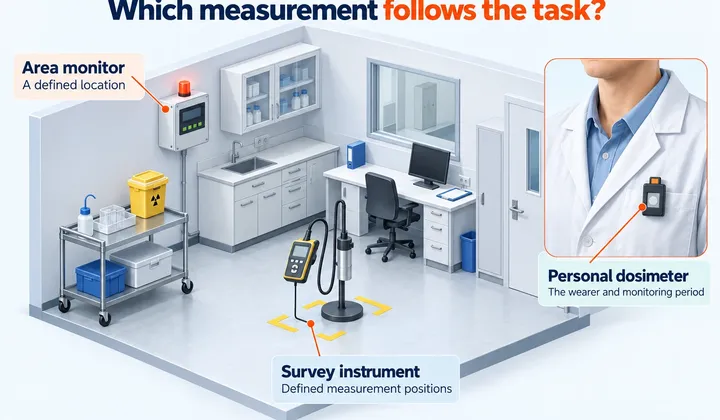
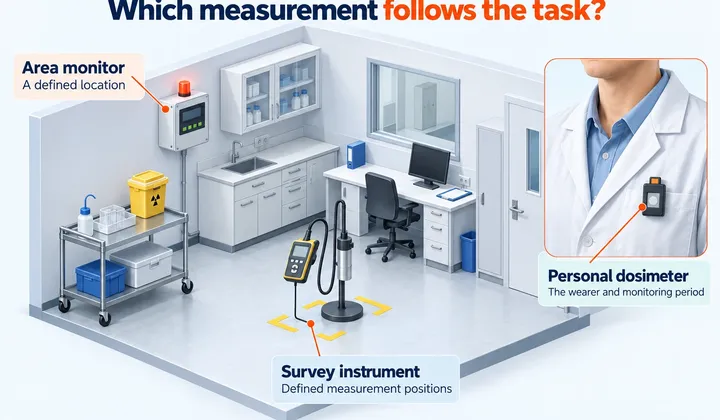
A monitor can indicate a radiation field without telling you whether radioactive material is present on a workbench. That distinction changes the next measurement, the instrument you need and the way the result should be recorded.
Separate the field from the material
Radiation exposure means that energy from radiation reaches a person or object. Contamination means radioactive material is in an unwanted place, such as on equipment, clothing or inside the body. The two can occur together, but they are not interchangeable. A sealed source can create an external radiation field while its radioactive material remains contained.
Choose a measurement that answers the question
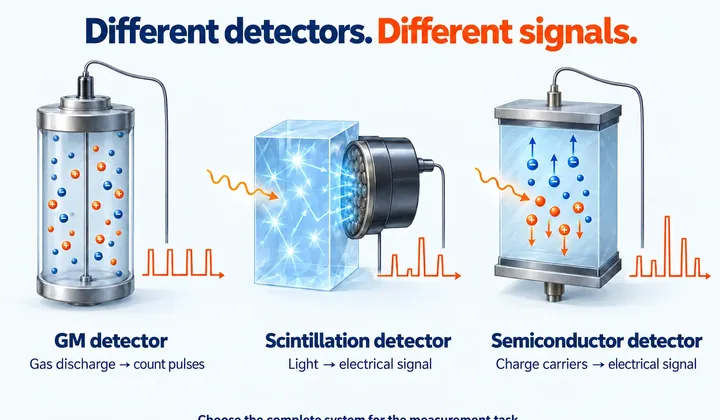
A field measurement investigates radiation at a position. A direct surface survey investigates instrument response close to a surface. A wipe measurement can help assess removable contamination when the sampling and counting method is appropriate. Detector suitability depends on the expected emissions and the procedure, not merely on the appearance of the meter.
An instrument with gamma response should not automatically be treated as an alpha or beta surface-contamination instrument. Review the types of ionizing radiation before specifying a survey method.
Describe the result without overclaiming
Record what was measured, where the detector was placed and which quantity the display reported. “Gamma dose rate at the workstation” is a different statement from “removable surface activity.” Keep the distinction visible in reports and training materials.
A reading beside a bench is only the beginning
Suppose a training record says, “The bench gave a higher reading than the corridor.” Before labeling the bench contaminated, review the observation. Was the detector held above the work surface, directed toward a nearby source or used to count a collected wipe? Was the displayed result a count rate or a dose rate? Each version describes a different piece of evidence.
A nearby source can contribute to the direct instrument response. A properly collected wipe can move part of the investigation to a counting arrangement with a different background, but it samples only the material transferred to that wipe. The collection area, recovery assumptions and counting method remain important. Neither result should be rewritten as a broader conclusion than the procedure supports.
Make a two-question survey brief
- Field question: which locations and operating conditions need a radiation-field measurement?
- Material question: which surfaces or items need assessment for contamination, and is removable material the concern?
- Evidence: which detector, geometry, background measurement and recording method belong to each result?
- Decision: who compares the findings with the applicable procedure and decides the next action?
This brief prevents a common reporting shortcut: using one reassuring number as permission for an unrelated activity. It also helps explain why a team may return with two different instruments without repeating the same job.
What does a result near background mean?
It means the particular measurement did not show a clear increase under the conditions used. It does not establish that every radionuclide, surface or possible intake was assessed. A detector poorly matched to the expected emissions may give little useful response. Keep the detection capability and survey coverage with the result. The practical takeaway is to name the question first, then name the measurement that actually addressed it.
The Nucleolenz Indoor Area Gamma Monitor belongs in discussions about fixed gamma-field monitoring. It should not be presented as proof that a surface is free from contamination. A complete monitoring plan may need several complementary measurements, defined by the site's radiation protection arrangements.
Check your understanding
Put the idea to work
Choose an answer, then reveal the explanation. Your answers stay in this browser.