
Questions to Ask a Radiation Instrumentation Engineer
Bring better questions to an instrumentation discussion: define the quantity, check the evidence, understand the workflow and agree how changes will be assessed.
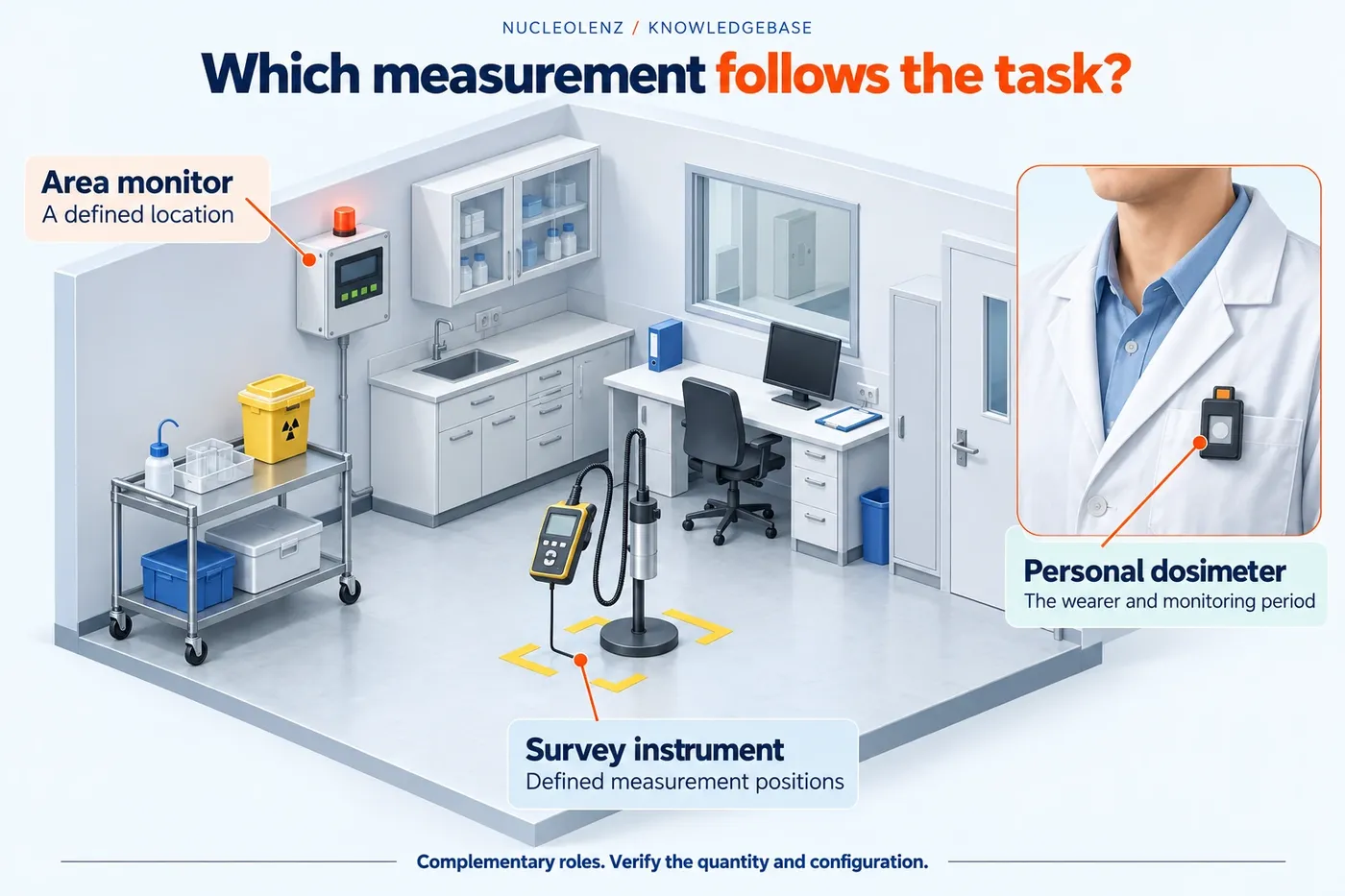
Open the concept graphic at full size ↗
Three key ideas
Question, evidence, next action
- Define the result: State the quantity, conditions and decision the data will support.
- Ask for evidence: Request configuration-specific records, methods and tests.
- Close the gaps: Assign owners to missing information and proposed verification.
At a glance
Compare the key distinctions
| Focus | What it establishes or needs | Important limit or evidence |
|---|---|---|
| Measurement | What quantity does this report? | Representative result and relevant calibration |
| Workflow | How will the data reach our records? | Interface definition and reception test |
| Limitations | What conditions change suitability? | Documented scope and exclusions |
| Acceptance | How will the requirement be checked? | Agreed method and retained evidence |
The questions support technical scoping; they do not imply unverified product features or company practices.
An engineering discussion is more productive when the questions describe the measurement rather than ask whether an instrument is “good.” Bring the task, conditions and intended decision into the conversation.
Ask about the result and its evidence
Which quantity does the system report? Which radiation types, energies and configurations support that result? What calibration applies, and which conditions fall outside the stated scope?
Ask the engineer to distinguish raw detector information from a processed indication. If an identification or activity result is expected, ask which analysis method and additional calibration make that claim supportable.
Ask about the workflow around the instrument
What acquisition settings affect response or repeatability? Which metadata should be stored with the result? How are status, fault and unavailable-data conditions distinguished from normal measurements?
For connected equipment, ask what the receiving system must know about the interface and units. A successful connection does not automatically establish that the receiving display is interpreting the information correctly.
Ask what changes the answer
Which accessories or detector substitutions require review? What happens if the source arrangement, background or environment changes? Which checks establish readiness for use, and which tasks require a separate qualified assessment?
Nucleolenz's public product descriptions provide starting points for these conversations. Use the exact model and proposed configuration when asking for documentation; do not infer an answer from another instrument in the range.
Bring a one-page brief to the discussion
For a fictional project, replace “We need a sensitive radiation meter” with a short brief describing the decision, expected radiation, location, operating conditions and required record. Add a sketch of the intended arrangement if it can be shared. Mark unknowns clearly, such as the required response time or whether radionuclide identification is actually necessary.
The engineer can then separate what is established from what needs investigation. Record answers against each question rather than treating a catalogue or demonstration as the answer to the entire brief. This makes follow-up manageable and gives both parties the same description of the proposed work.
Ask for examples of evidence, not adjectives
- Can you show the quantity and units in a representative result?
- Which model, detector and configuration does the calibration document cover?
- What uncertainty or response information is relevant to our intended decision?
- Which test demonstrates the interface or alarm function we need?
- How would the record identify a fault, missing data or a changed configuration?
A useful response identifies a document, example or proposed test and explains its scope. “Calibrated” is a starting point, not the full answer: the calibration must be relevant to the quantity, configuration and conditions being discussed. Traceability supports a measurement result but does not, on its own, prove fitness for every application.
Leave with actions that can be closed
End the meeting with three lists: agreed requirements, unresolved technical questions and evidence to be supplied. Give each open item an owner. If a demonstration is proposed, state which question it will answer and what data will be retained. A demonstration of data arriving on a screen, for example, is different from evidence that the receiving system interprets units and status correctly.
When the project changes, revisit the brief. A different probe, sample arrangement or installation environment can change the evidence needed. The best question to keep asking is, “What supports this conclusion for our exact task?” It invites a precise engineering answer without demanding an unsupported promise.
This article supplies questions, not attributed answers from an unnamed Nucleolenz engineer. A later expert Q&A should use verified responses and approved supporting evidence. The aim is to turn uncertainty into precise requirements and to understand what the selected system can establish before the project relies on its measurements.
Check your understanding
Put the idea to work
Choose an answer, then reveal the explanation. Your answers stay in this browser.