Why Screen Incoming Scrap Metal for Radioactive Material?
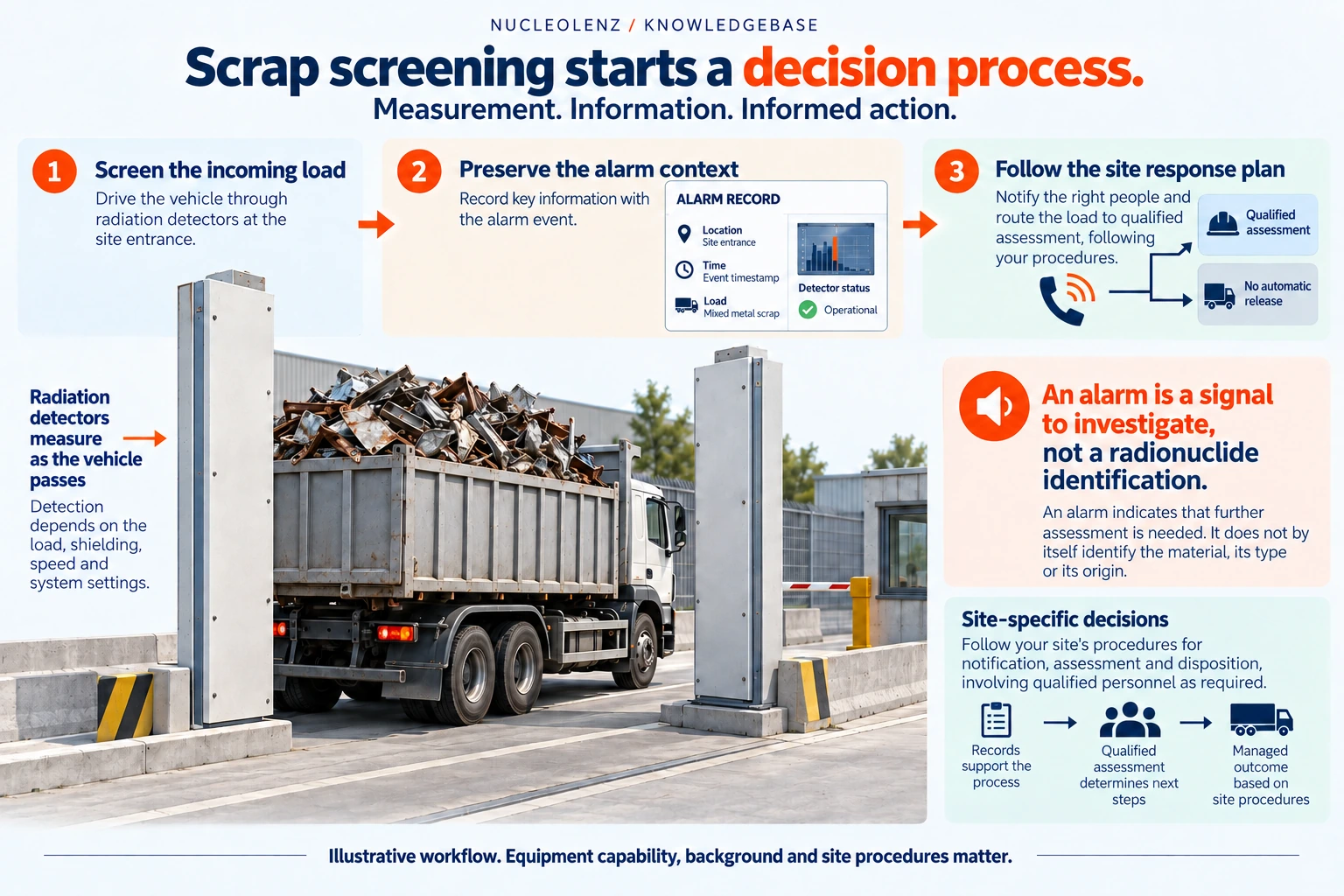
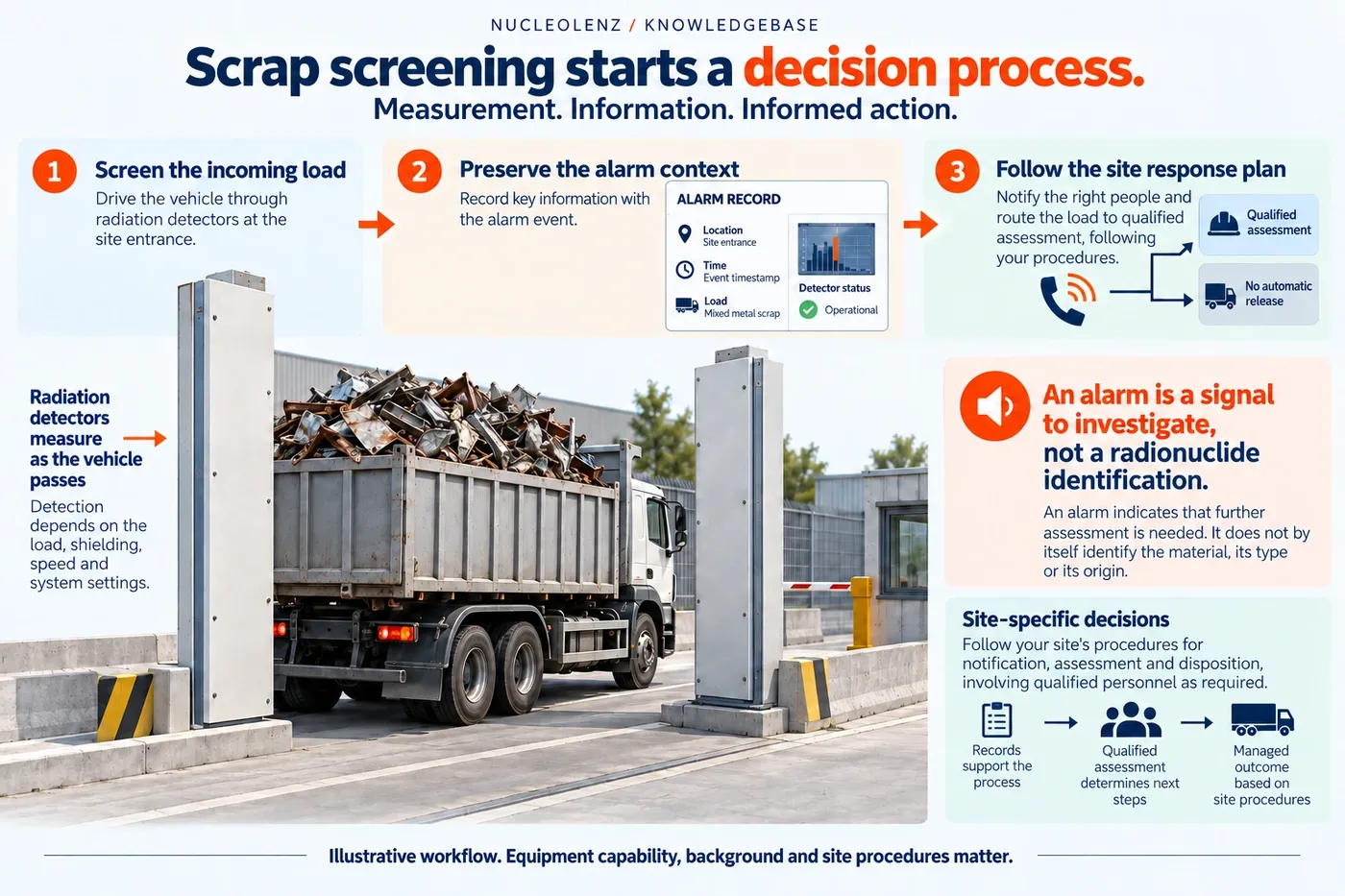
Incoming scrap screening helps identify suspicious radiation before processing. Its value depends on coverage, traceable records and an approved response.
Open the concept graphic at full size ↗
Three key ideas
Screening belongs in a controlled workflow
- Identify: Connect the material flow with a shipment record.
- Screen: Record the indication, system status and conditions.
- Escalate: Use the approved qualified investigation and disposition route.
At a glance
A practical review guide
| Review point | Evidence to look for | What it does not establish |
|---|---|---|
| Screening objective | Material flow, geometry and intended coverage | Detection of every possible concealed source |
| System role | Portal, fixed or portable arrangement | Automatic interchangeability |
| Indication | Shipment link, time and status | Radionuclide identification from every screen |
| Disposition | Qualified assessment and authorized decision | Permission to handle or return a suspected source |
Use the applicable instrument documentation and the approved site programme for operational decisions.
Incoming scrap screening provides an opportunity to identify an unexpected radiation indication before material enters processing. Improperly discarded radioactive sources or contaminated items can enter recycling streams. If radioactive material is melted with scrap, it can contaminate the resulting metal and other process materials. Screening is therefore part of a material-control process, with a defined detection objective and an established route for qualified assessment.
State what the screening system is intended to do
Describe the incoming material flow, load types, geometry and detection objective. Visual inspection and a supplier's description do not establish the absence of radioactive material. Equally, a screen with no alarm does not prove that every possible source would have been detected. Background, shielding by the load and the measurement arrangement influence what a system can observe. The specification should explain the intended coverage and its limitations.
Keep screening and investigation separate
A portal system, a fixed area monitor and a portable investigation instrument have different arrangements and purposes. They should not be treated as direct substitutes without the necessary assessment. An initial screen may identify an indication needing attention; a later investigation may use different equipment and methods to establish more about it. Record those stages separately so the findings do not imply that the initial screen performed an analysis it did not actually make.
Connect an indication to an approved route
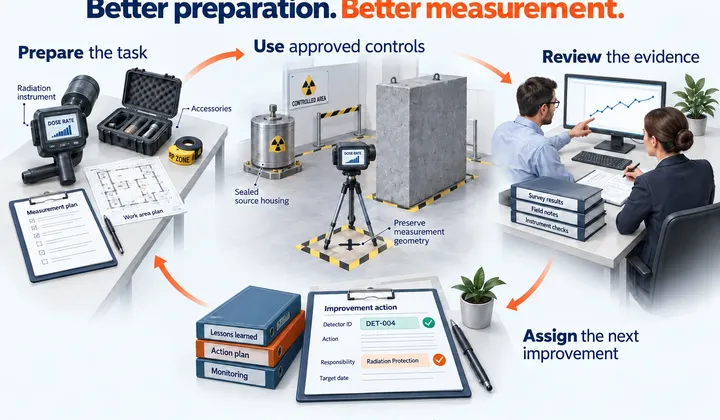
Before screening begins, define responsible contacts, material-control arrangements and the qualified investigation process. Personnel should not handle a suspected source, open a suspicious item or improvise its return shipment based on an online article. The site's approved arrangements and competent authorities determine the response and disposition. Training should make clear how an operator preserves information and reaches the responsible person without taking on an unassigned investigation role.
Practice: the vehicle layout changes
In a fictional facility review, the same screening equipment is used after the incoming vehicle arrangement and typical load composition change. Operators still receive familiar status indications, but the assumptions behind the original detection assessment may no longer describe the process. The review should compare the new arrangement with documented coverage, identify required reassessment and retain the decision. A single successful demonstration with one load cannot stand in for every later configuration.
This exercise is about the scope of evidence. It does not suggest testing a suspected source or changing operational settings informally. The responsible programme defines any performance assessment and how changes are approved.
Make the shipment record traceable
- Link the screening result with the shipment or vehicle identity.
- Record the time, system identity and relevant operating status.
- Preserve the measurement or alarm information supported by the system.
- Note relevant changes or interruptions in the screening arrangement.
- Link any investigation as a separate, identifiable activity.
- Retain the authorized disposition decision and its supporting record.
Review the whole decision process
Assess whether information reaches the right people as well as whether equipment operates. An alarm that cannot be linked to a shipment or responsible contact is harder to act on. Exercises can expose those gaps before an actual indication. Review the documented coverage when throughput, geometry or material type changes.
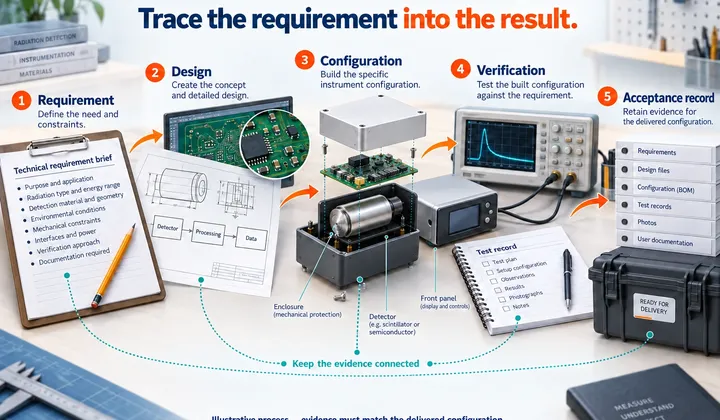
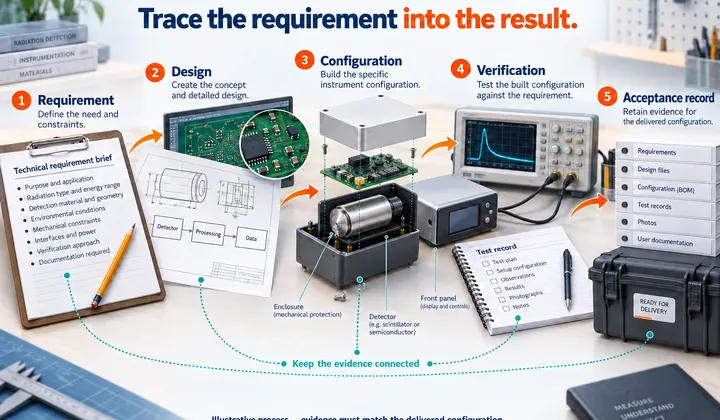
Nucleolenz instrumentation discussions should begin with the screening objective and downstream workflow. This article does not claim that a current Nucleolenz product is a certified scrap-metal portal monitor. A useful requirement describes what must be detected, the conditions under which screening operates and the evidence needed to support the proposed system.
Check your understanding
Put the idea to work
Choose an answer, then reveal the explanation. Your answers stay in this browser.