

Nucleolenz field study
High-volume air sampling for environmental monitoring
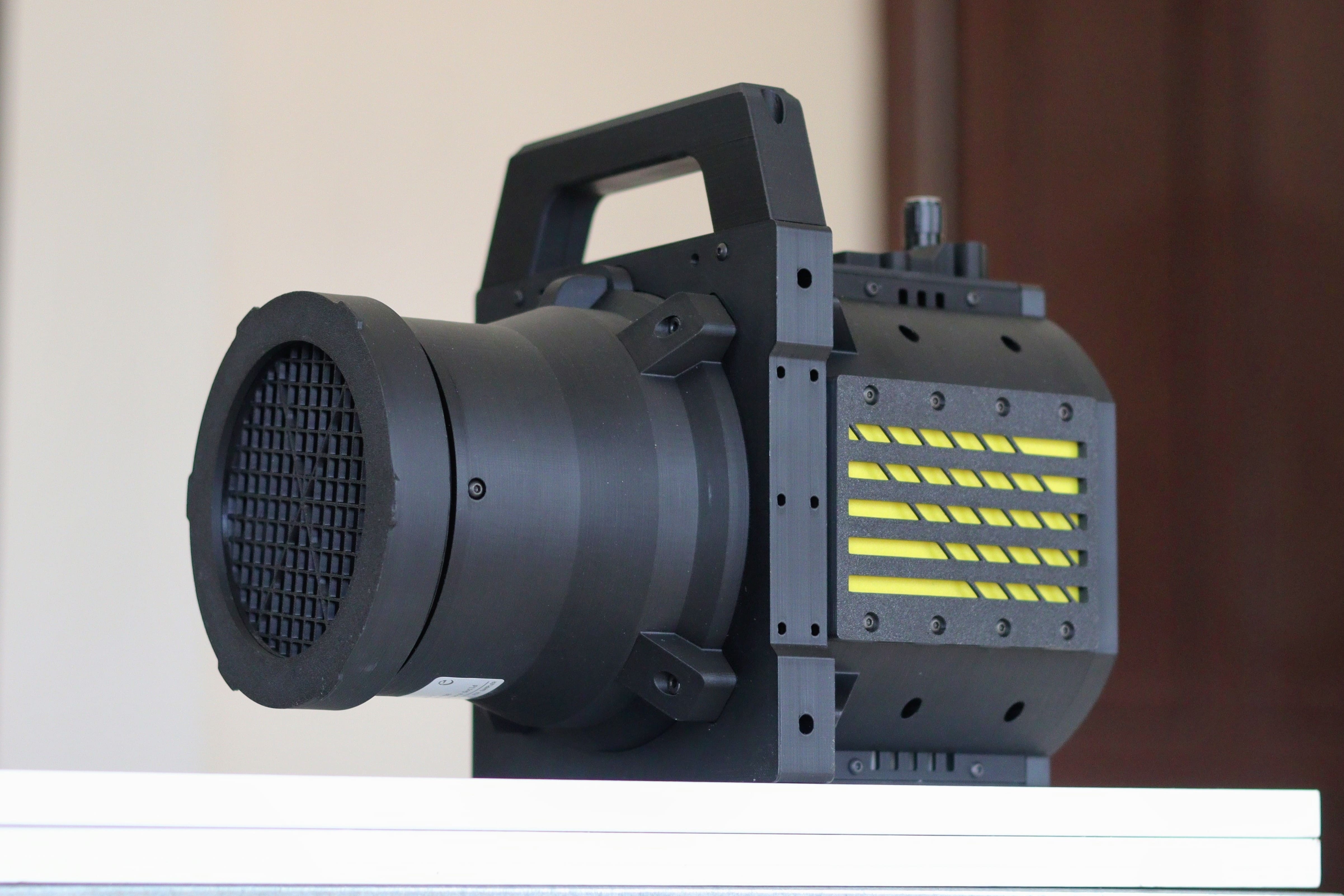
Conventional high-volume samplers are heavy, run at one factory-set speed, and depend on the operator's stopwatch. Elementz designed a portable sampler delivering up to 1000 lpm in an instrument under 2.5 kg — with closed-loop speed control, automatic volume cut-off and OTA updates.
The challenge
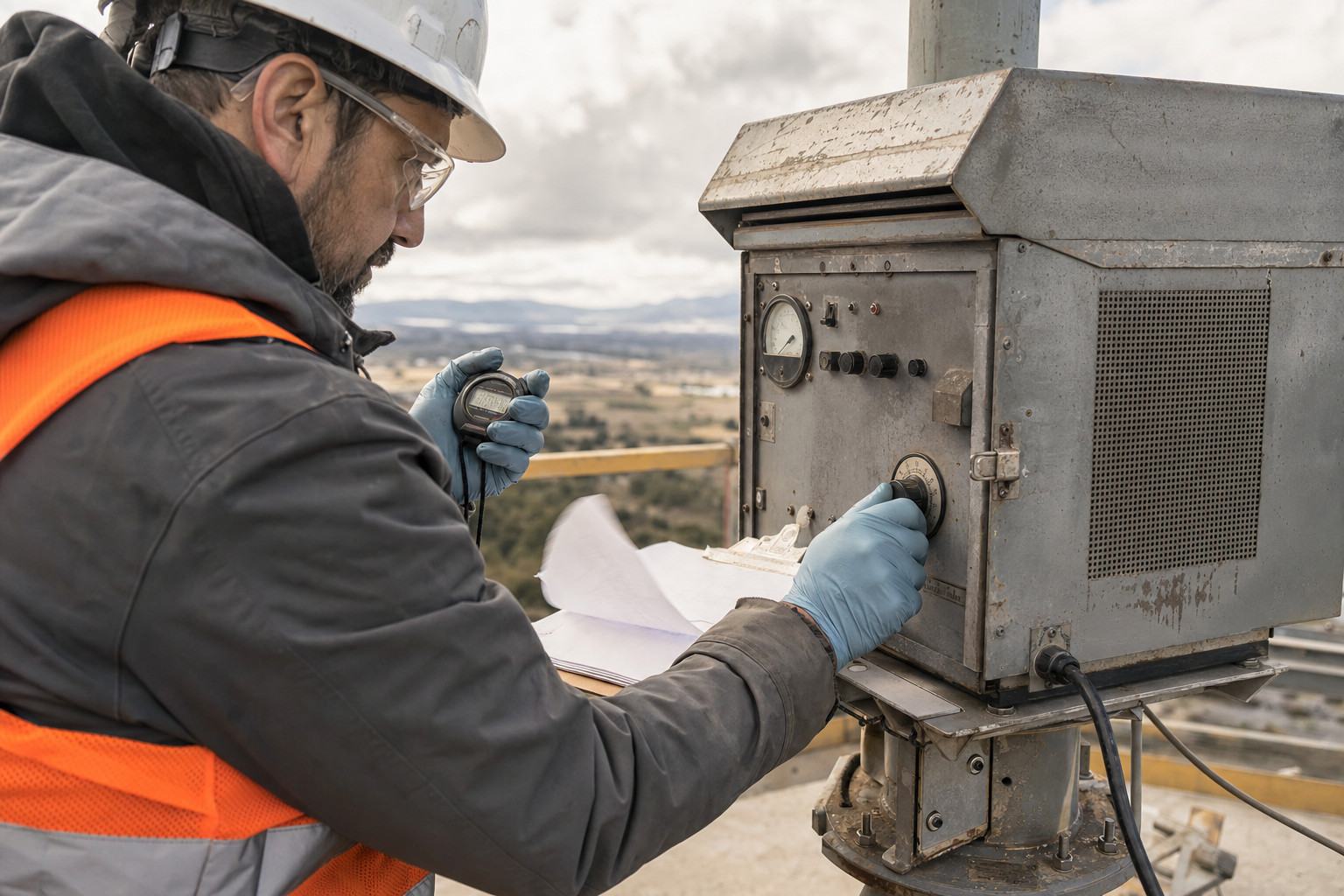
Conventional high-volume air samplers used in environmental, pharmaceutical and microbiological monitoring share a recurring set of weaknesses. Metal enclosures push the unit weight well past comfortable carrying limits, the blower runs at a single factory-set speed the operator cannot tune to a given filter's resistance, and the sampling cycle has to be stopped manually once the target air volume is reached — leaving the actual sampled volume dependent on the operator's stopwatch.
Elementz was approached to design a new generation of portable sampler that would address these limitations end-to-end: a lighter housing, electronic speed and volume control, a clear on-device readout, and a firmware platform that could be updated in the field without a service visit. The unit had to remain compliant with the 230 V / 50 Hz single-phase mains standard of the target markets, and had to be assembled, calibrated and serviced entirely in-house.
Holding a regulated flow of up to 1000 lpm across a wide range of filter back-pressures — while keeping blower acoustics, current draw and total weight inside portable-instrument limits — was the defining engineering challenge.
- Flow adjustable up to 1000 lpm with 1 lpm display resolution
- Total weight below 2.5 kg with a sturdy integrated stand
- Operator-set speed control tuned to the filter paper in use
- Automatic stop at the configured sampling volume
- Factory presets for the commonly used filter papers
- OTA firmware update path — no wired programmer, no recall
What we built
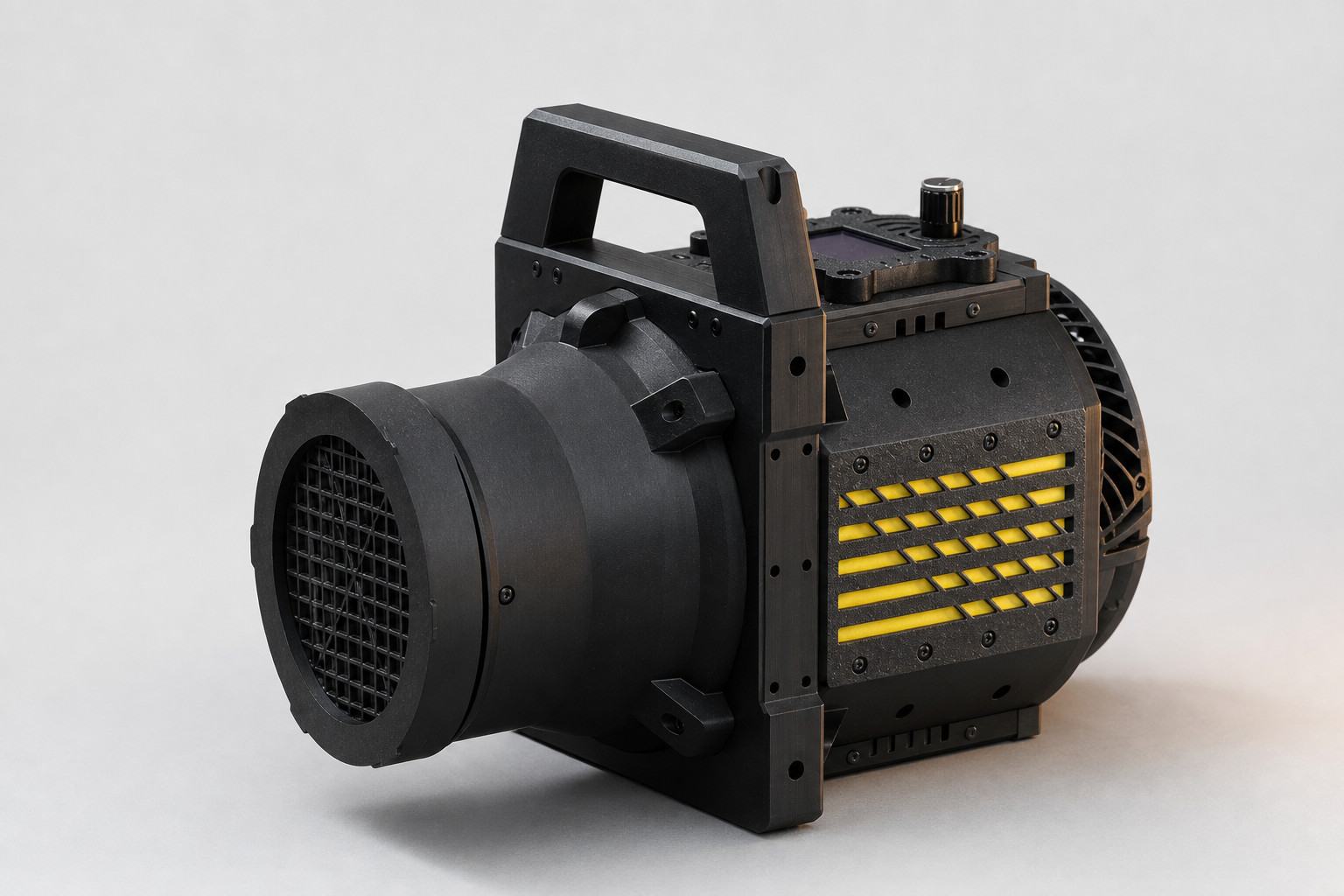
Closed-loop speed control holds the blower at the operator's setpoint — exposed through a front-panel potentiometer and visualised on the OLED in real time alongside instantaneous flow, cumulative volume and unit status. An automatic cut-off routine integrates measured flow over time and stops the blower the moment the user-defined target volume is reached, removing the stopwatch from the loop entirely.
A full-ABS, non-flammable housing paired with a stamped, powder-coated stand keeps the complete instrument under 2.5 kg while meeting the drop and vibration handling expected of a portable lab instrument. The Wi-Fi-enabled microcontroller carries an OTA bootloader, so firmware patches, new calibration curves and new filter-paper presets reach fielded units without a recall.
Calibrated in-house, end to end
Elementz designed the controller board, blower driver, mains supply and front-panel I/O; the enclosure and its thermal layout; and the full firmware stack from closed-loop control to the OTA client. The flow-sensing chain is calibrated against a reference flow meter, and the default filter-paper presets are characterised in-house — the same team that designs the instrument assembles, tests and services it.
Why it works
Lightweight by design
The ABS, non-flammable casing keeps the instrument well under 2.5 kg, so a single operator can carry the sampler between sampling points without a trolley or harness.
Configurable speed
A front-panel potentiometer tunes the blower setpoint to the resistance of the filter paper in use, instead of a single factory-set speed. Setpoint and resulting flow are both visible on the OLED.
Automated sampling cycle
Once the operator sets a target volume, the controller integrates the measured flow and stops the blower automatically at the cut-off. Sampled volume no longer depends on operator timing.
Filter-paper aware
The instrument ships with defaults for the commonly used filter papers, so a routine operator picks a preset rather than recomputing setpoints for each run.
Field-upgradable
OTA firmware updates push new presets, calibration curves and fixes to fielded units without recall or on-site service, extending the useful life of every unit.
Replacing the stopwatch with a volume cut-off, and the fixed-speed blower with a closed-loop driver, were the two changes that made the biggest difference in the field. The OTA path is what keeps the platform alive.
Elementz engineering team
Our role
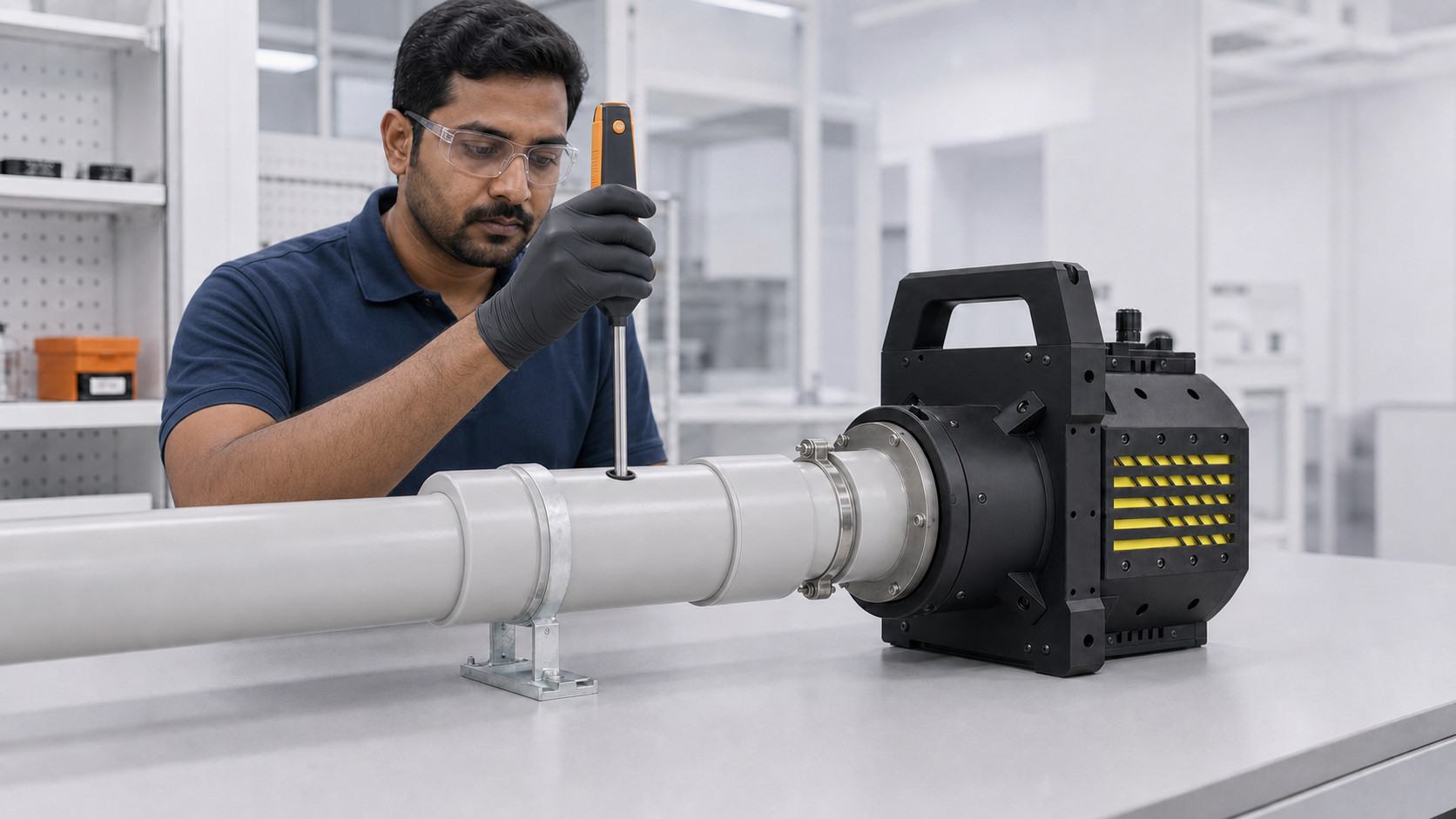
- Electronic design of the controller board, blower driver stage, mains power supply and front-panel I/O.
- Mechanical design of the ABS enclosure and stand, including thermal layout for the blower and driver electronics.
- Firmware for the on-board microcontroller: closed-loop speed control, flow integration, OLED UI, filter-paper presets and the OTA update client.
- Calibration of the flow-sensing chain against a reference flow meter, and characterisation of the default filter-paper presets.
- In-house assembly, end-of-line testing and service procedures for the production units.
Outcomes
- Up to 1000 lpm with 1 lpm display resolution, ready to use under 2.5 kg
- Sampled volume no longer depends on operator timing
- One operator carries the sampler between points — no trolley
- New presets and fixes reach fielded units without a service visit
- A platform Elementz can extend to adjacent product lines without re-tooling
Requirements
- Mains: 230 V, 50 Hz, single phase
- Display: OLED — live flow, cumulative volume, setpoint, status
- Housing: ABS non-flammable casing, powder-coated stand
- Presets: factory-loaded profiles for common filter papers
- Calibration: flow chain characterised against a reference meter
Adjustable flow 0–1000 lpm
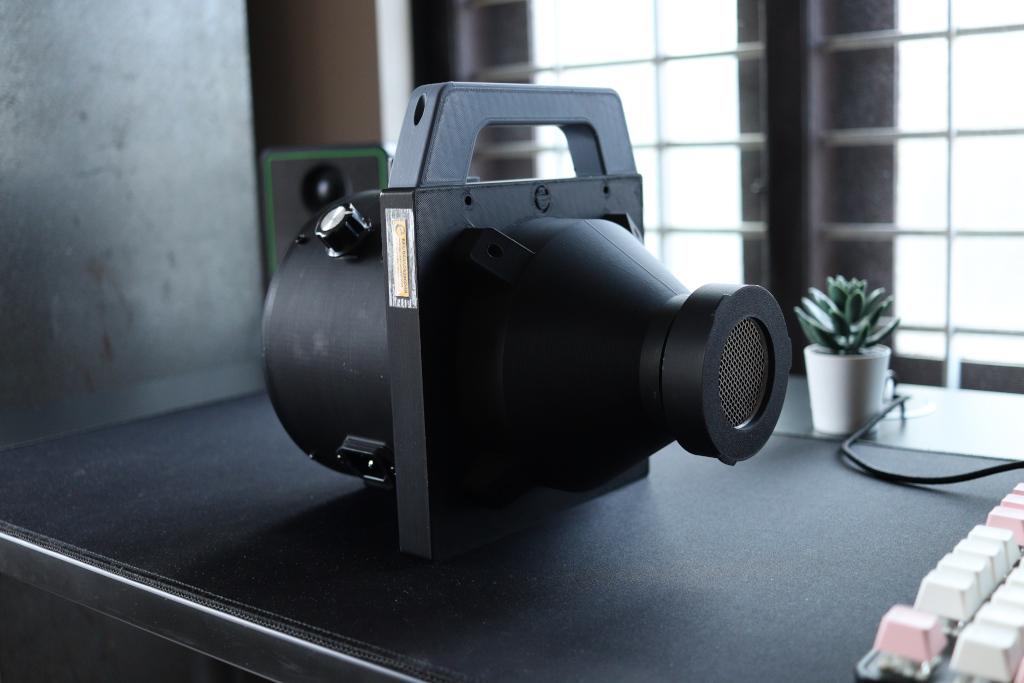
Instruments in this study
Measuring something difficult?
Tell us what you're trying to measure, and we'll share the closest deployment story — or scope a new one with you.
Get in touch