

Nucleolenz field study
Unattended outdoor gamma monitoring beyond the network
Area monitoring points often die where the network dies. The EGM-L210Y1 is an IP65, solar-powered area gamma monitor that pushes every reading to the central server over a LoRa link with up to 8 km line-of-sight — no cabling, no cellular coverage, no site visits.
The challenge
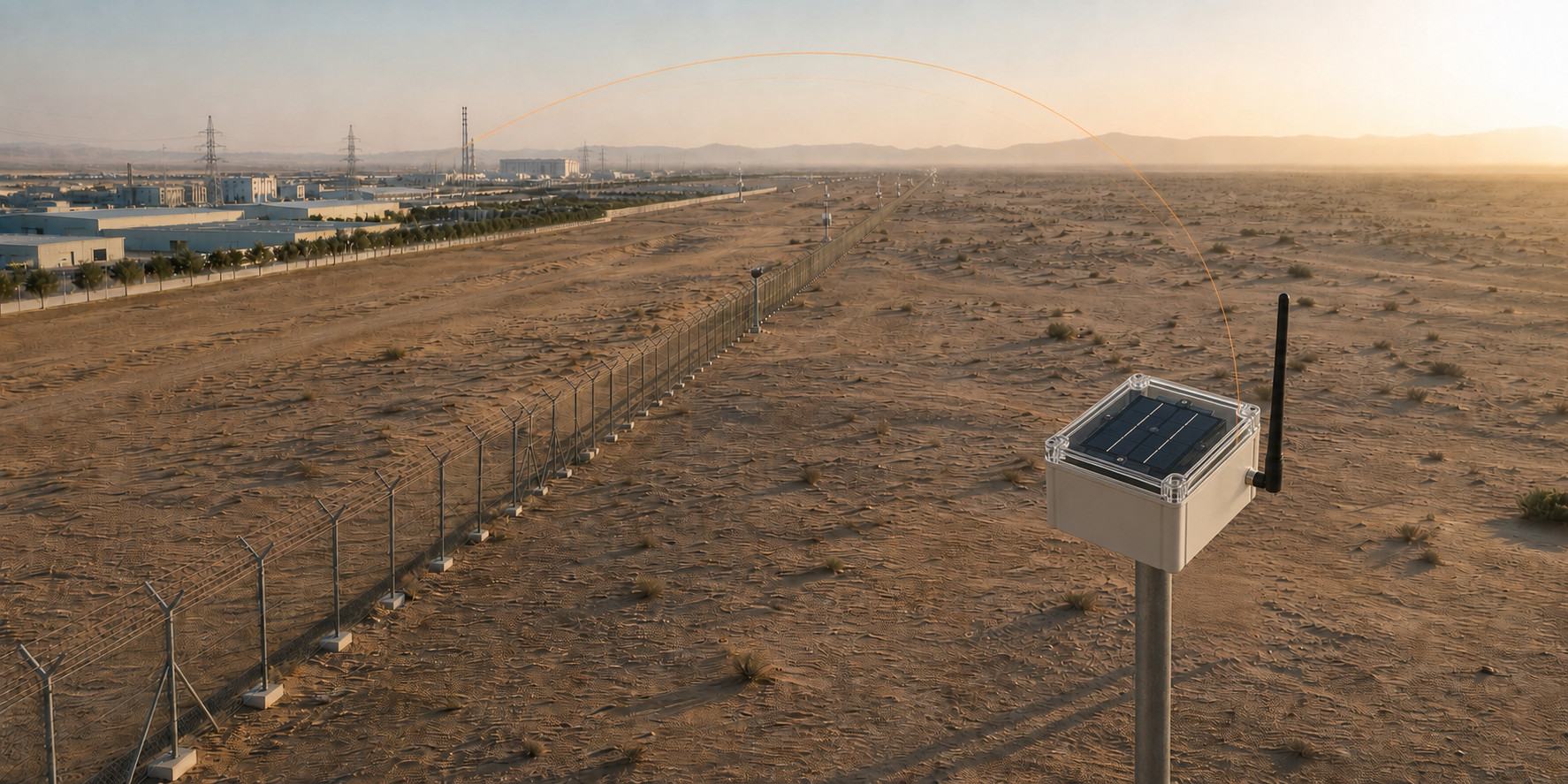
Area gamma monitoring around nuclear facilities, mineral-processing plants, hospitals and industrial radiography sites has historically relied on mains-powered enclosures wired back to a control room. The cabling cost, the dependence on facility power and on cellular or Wi-Fi coverage, and the routine site visits needed to keep instruments charged, calibrated and on-line are a significant share of the total cost of ownership. In remote and perimeter locations, they are often the reason a measurement point is simply not deployed.
Elementz, through its Nucleolenz product line, was tasked with building an outdoor area gamma monitor that could be dropped into a remote location and left alone — including locations with no cellular coverage and no facility network. The unit had to survive outdoor exposure, run on its own harvested energy, push readings to the central server in real time without operator action, and accept calibration adjustments without anyone climbing up to the device.
The engineering constraints were tight: keep a detector and its electronics powered around the clock from a 3 W solar panel and a 2500 mAh battery through low-light days; cover four decades of dose rate — 0.01 to 100 mR/h — on one channel without range switching; and meet IP65 while still letting the solar panel harvest and the antenna radiate.
- IP65 outdoor enclosure with integrated solar harvesting
- Live telemetry from sites with no cellular, Wi-Fi or wired backhaul
- 0.01–100 mR/h covered on a single detector channel
- GM tube and scintillator front-end compatibility
- Remote calibration without opening the enclosure
- Automatic, continuous reporting to the central server
What we built
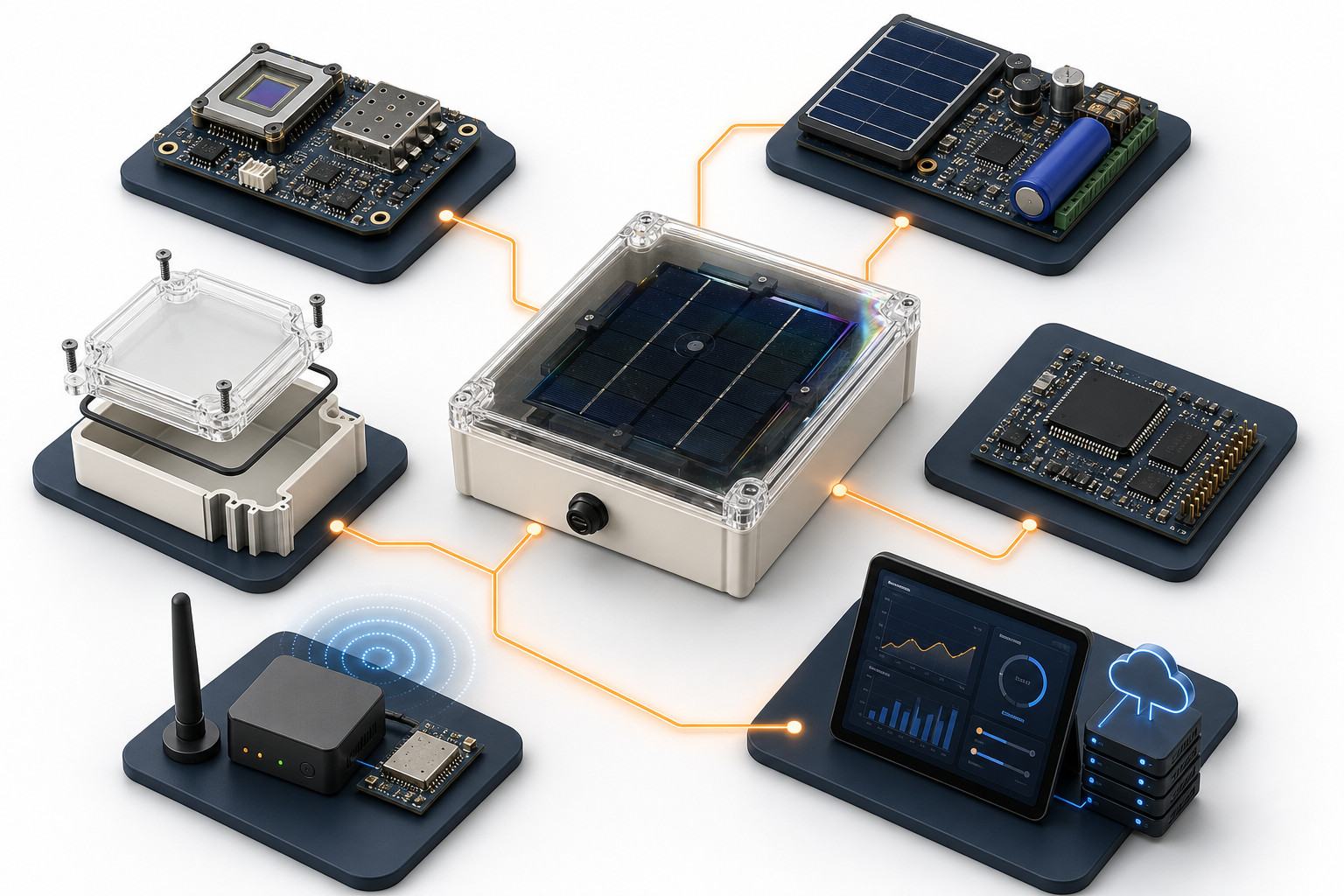
The EGM-L210Y1 pairs a low-power detector readout with a LoRa radio link that reaches up to 8 km line-of-sight between the field unit and the site gateway. A single gateway collects a wide ring of field units, which makes site-wide coverage economical instead of cabling-heavy — the monitor keeps reporting from kilometres beyond where conventional units stop.
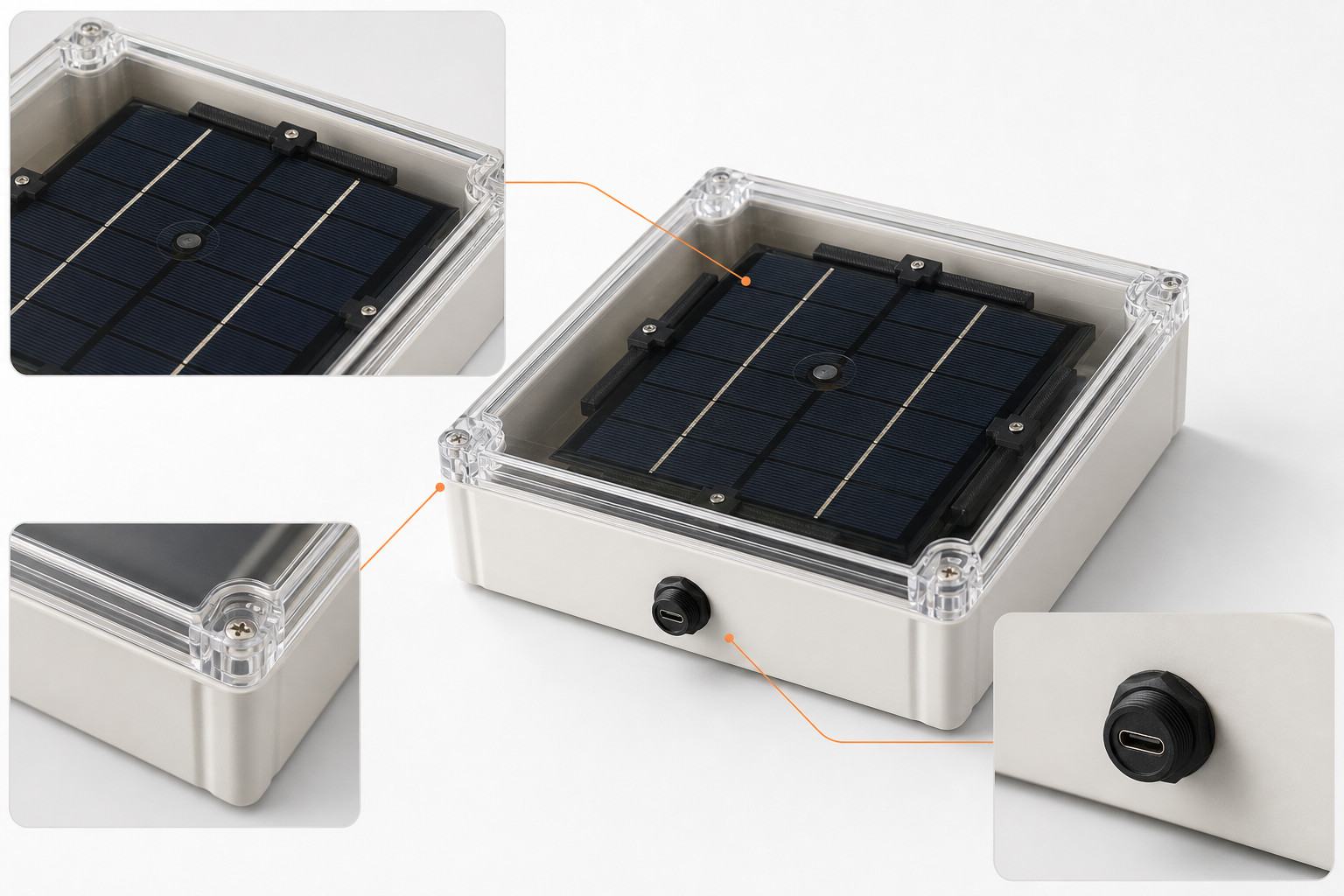
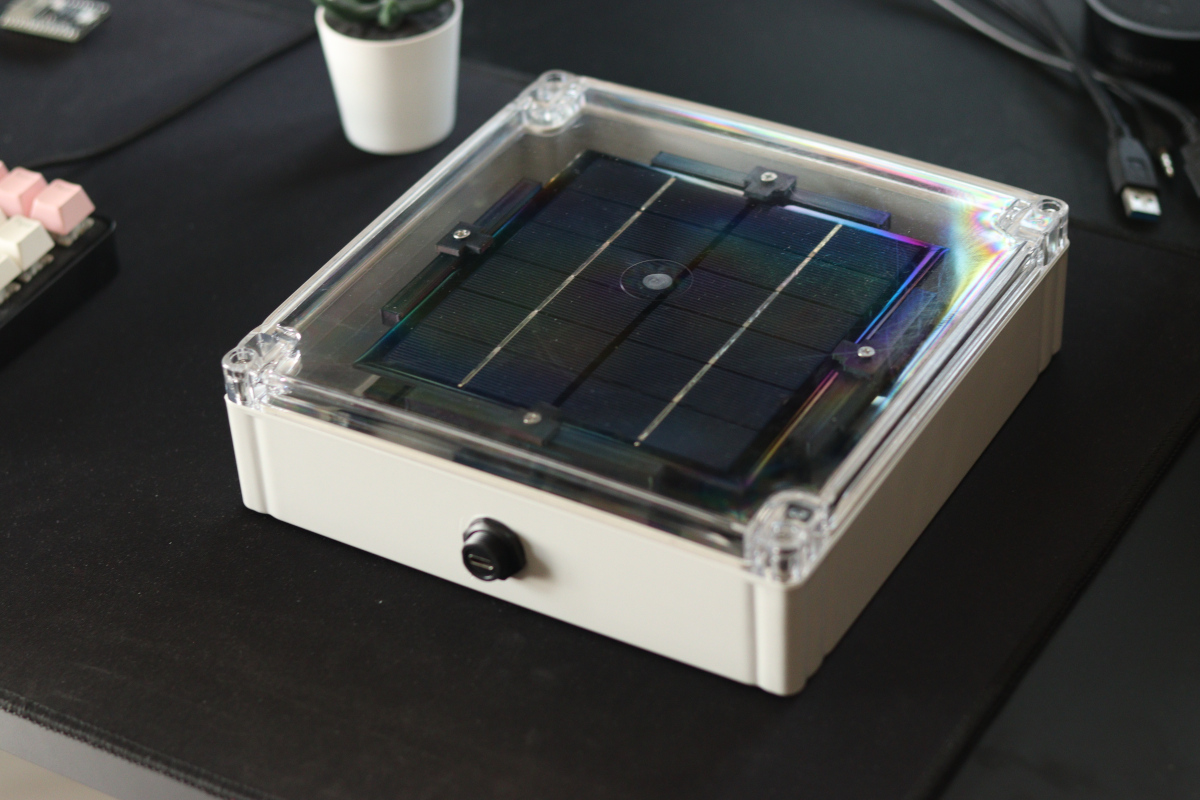
The two-part enclosure — ABS base, polycarbonate lid — is validated to IP65, with the solar panel integrated into the lid and a single Type-C service port. Detector signal-conditioning handles both GM tube and scintillator sensors across the full 0.01–100 mR/h range. A Wi-Fi access-point mode handles first-time commissioning in the field, and calibration factors are pushed to deployed units from the server.
Hands-off by design
An always-on telemetry client uploads dose-rate readings, alarms and device health to the Nucleolenz central server the moment they exist on the device, with on-device buffering across link drops — the gap replays as soon as the link returns, so the central record stays complete. Calibration coefficients, thresholds and configuration flow back down the same link.
One team, six layers
Detector front-end, power electronics, LoRa link, mechanical enclosure, firmware and server UI were all designed inside Elementz — which is what made the power budget close: firmware duty-cycling, front-end current draw, LoRa transmit cadence and solar/battery sizing were tuned against each other rather than handed over a wall. At the gateway, relay, 4–20 mA, RS-485 and Ethernet are available on the same unit, so the system drops into existing SCADA and monitoring backbones.
Why it works
Long-range LoRa connectivity
A LoRa radio link with up to 8 km of line-of-sight range lets the monitor deploy at perimeter fences, quarry and mine edges, rural rooftops and forest-edge sites where there is no cellular signal, no Wi-Fi and no possibility of trenching a cable. One gateway collects a wide ring of field units, making site-wide coverage economical.
Autonomous in the field
The integrated 3 W solar panel and 2500 mAh Li-ion battery run the unit uninterrupted in remote, unattended locations, eliminating the routine charging visits that dominate the operating cost of conventional monitors.
Built for outdoor service
The IP65 ABS-and-polycarbonate enclosure protects the electronics across the full outdoor envelope, while the polycarbonate lid keeps the solar panel productive without compromising the seal.
Automatic central-server updates
Every unit pushes dose-rate readings, alarms and device-health to the Nucleolenz server automatically over LoRa. No manual upload, no scheduled sync. If the link drops, the unit buffers locally and replays the gap on reconnect, so the central record stays complete.
Remote calibration
Calibration factors are managed from the server. A field unit can be re-calibrated in minutes without opening the enclosure or sending a technician to the pole.
Integration-ready
Relay, 4–20 mA, RS-485 and Ethernet are all available at the gateway, so the unit drops into existing SCADA, DCS and area-monitoring backbones without an external converter.
The EGM-L210Y1 is the unit you install once and forget — even where there is no cellular signal and no facility network. Solar keeps it alive, LoRa carries every reading up to 8 km back to the gateway, and the server keeps it calibrated.
Elementz / Nucleolenz engineering team
Our role
- Electronics design of the detector front-end, low-power MCU board, battery management and solar-charging stage.
- Mechanical design of the IP65 ABS / polycarbonate enclosure and pole-mount, including solar-panel integration and the Type-C service port.
- Firmware: detector readout, dose-rate calculation across the full 0.01–100 mR/h range, Wi-Fi AP commissioning, telemetry over LoRa / RS-485 / Ethernet, and the remote-calibration client.
- LoRa link design and tuning — antenna selection, packet structure and on-air retry strategy — for a robust 8 km line-of-sight link within the solar/battery power budget.
- A device-to-server telemetry stack that uploads every reading to the Nucleolenz central server over LoRa, with local buffering and automatic re-sync on reconnect.
- Server-side integration with the Nucleolenz monitoring UI for live dose rates, system status and pushed calibration updates.
- In-house assembly, calibration against a reference source, and end-of-line testing for production units.
Outcomes
- Runs autonomously on solar power — no scheduled charging visits
- Reports from perimeter, forest-edge, mine and rural sites with zero backhaul
- Every reading lands on the central dashboard automatically, loss-less across link drops
- Four decades of dose rate covered on either detector type
- Re-calibration in minutes from a browser — no ladder, no laptop, no site visit
- Drop-in SCADA integration through four industrial interfaces
Requirements
- Solar: 6 V / 500 mA / 3 W panel with 2500 mAh Li-ion battery
- Detector: GM tube or scintillator front-ends, one channel
- Commissioning: Wi-Fi AP mode; single Type-C service port
- Outputs at gateway: relay, 4–20 mA, RS-485, Ethernet
- Remote calibration managed from the server UI
Detection range 0.01–100 mR/h
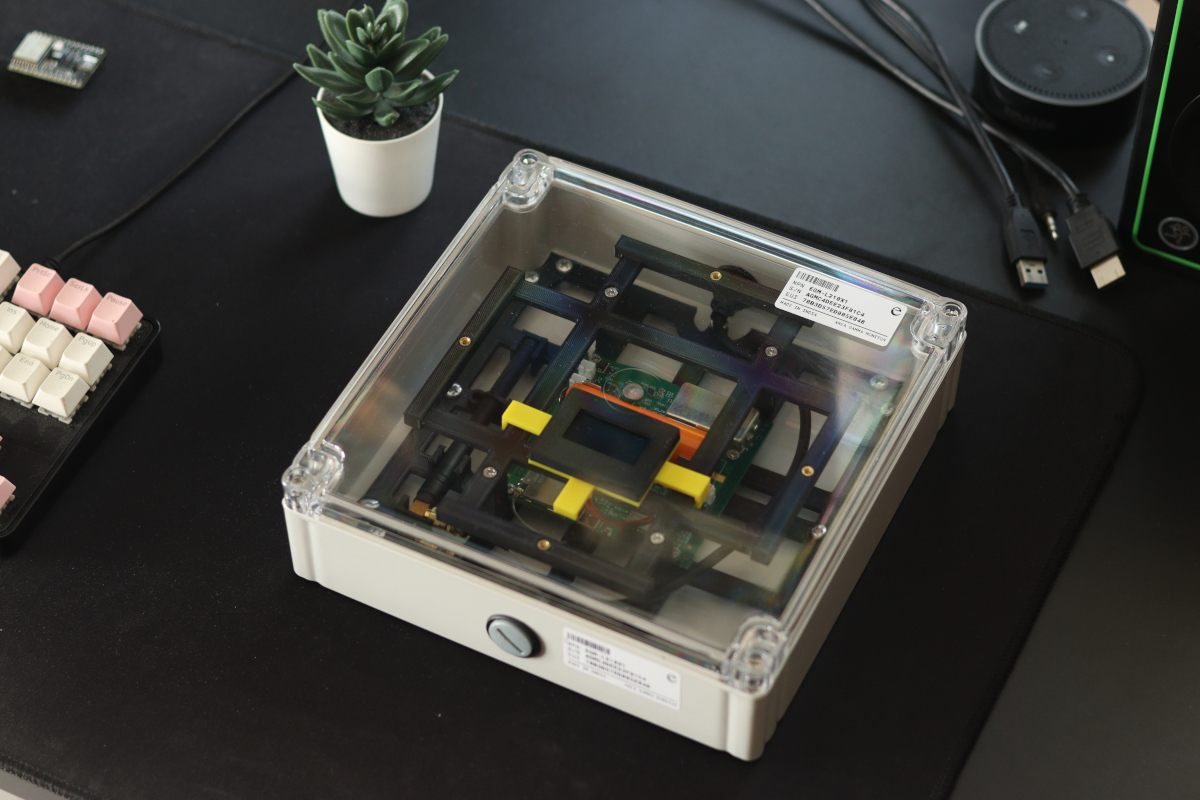
Instruments in this study
Measuring something difficult?
Tell us what you're trying to measure, and we'll share the closest deployment story — or scope a new one with you.
Get in touch